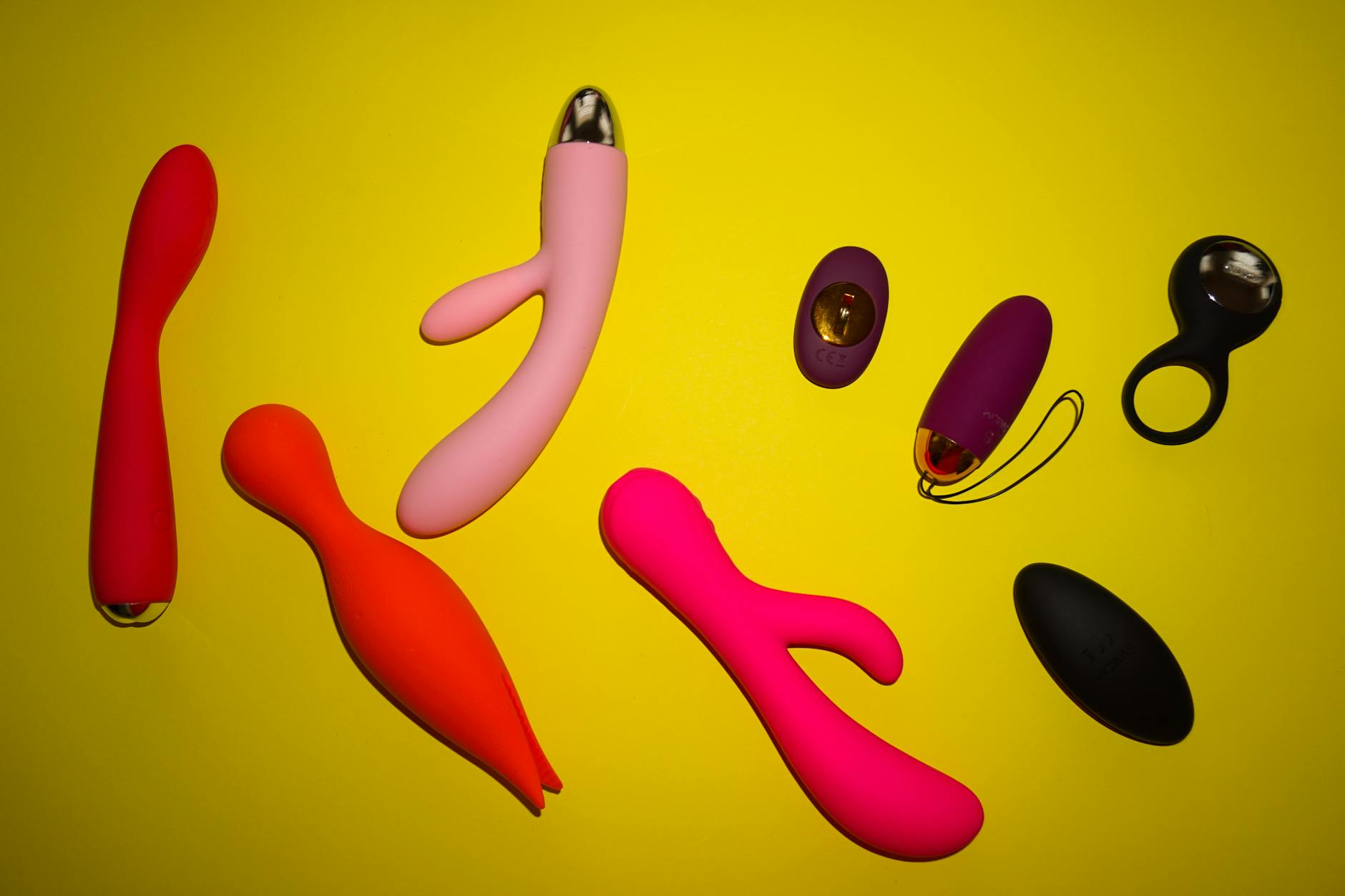
Why one setting doesn't fit everyone
Let's be real. You bought a lemon vibrator because it looked good and the reviews sounded promising. You get it home, turn it on, and think: "That's... a lot." Or maybe you think it's barely there. Both reactions are totally normal. Here's the thing most vibrator guides skip over. Your body isn't wrong. The setting just might not be calibrated for your nervous system, sensitivity, or what's happening in your life that week.
I work with couples on intimacy, and one of the most common frustrations I hear is that a toy that felt incredible last month now feels either too intense or too gentle. People assume they're desensitized or broken. Usually, they just need permission to experiment with different pressure settings instead of white-knuckling the same pattern every time.
The pressure spectrum
Most lemon vibrators have somewhere between three and ten intensity levels. My Lemon Suction's Lem vibrator, for example, offers a full range from subtle to serious. The mistake most people make is jumping straight to level five or six. They think "more pressure equals more sensation equals better results." That's not how your nerve endings work.
Your clitoris has somewhere around 8,000 nerve endings concentrated in a space smaller than a fingernail. Too much pressure and you're not stimulating them more effectively. You're numbing them. You're also flooding your nervous system with input, which can actually make orgasm harder, not easier.
The right pressure setting isn't the one that feels strongest. It's the one that lets you feel the most.
Start lower than you think you need to
I recommend almost everyone begin at level one or two, even if you've used vibrators before. Here's why. Lower pressure lets you find the sweet spot on your body. The clitoris isn't a flat target. There's the visible external part, but the internal structure extends up inside your body like a wishbone. Different pressure levels and angles activate different parts of that internal network.
When you're at level one, you can move the vibrator slightly and feel exactly where the sensitivity lives. You get data. At level six, you've already past the point where that kind of fine-tuning matters. You're just trying to survive the sensation.
Spend five to ten minutes at lower settings before you turn anything up. Your body will literally tell you when it's ready for more. You'll feel an internal shift, a deepening of sensation, a kind of magnetic pull toward the vibrator.
How to build intensity gradually
If you're starting at level one and nothing's happening after ten minutes, move to level two. Then three. The key word is "gradually." Give yourself at least two or three minutes at each level before you jump to the next one.
You're not trying to find the pressure that feels good right now in this moment. You're calibrating your nervous system to build toward arousal. Arousal is a process, not a switch. The more gradually you increase intensity, the more your whole body gets on board. Breathing deepens. Blood flow increases. Your pelvic floor relaxes (yes, relaxes. Tension is the enemy of pleasure). By the time you're at a higher level, you're not just physically stimulated. You're psychologically ready too.
One more thing. If you're self-conscious or anxious, don't skip the lower levels just to feel "productive." Anxiety literally makes everything less sensitive. Your parasympathetic nervous system needs to activate first. That usually means your brain needs to stop running a loop of worry about whether this is taking too long or whether you're doing it wrong. Lower pressure and patience give your brain permission to settle.
The sweet spot isn't always the highest setting
Here's what surprised me when I started working with clients on this. Most people have an optimal pressure level somewhere between levels three and five. Not the top. Not the lowest. The middle. And this changes depending on tons of variables.
Cycle phase matters. If you're familiar with how your pleasure responds during different cycle phases, you know that mid-cycle you might handle a higher intensity, while other times of the month you need something gentler. Stress matters. Hydration matters. Whether you've had enough sleep matters. Whether you just got bad news matters.
The smart move is to treat each session fresh. Check in with what your body needs today instead of defaulting to "what worked last time." This sounds like work. It's actually the opposite. It's the difference between forcing your body to cooperate with an arbitrary setting and letting your body guide you to what actually works.
One more variable that people rarely discuss. How recently you've used the vibrator. If you're dealing with desensitization from frequent use, you might need to dial down the pressure settings for a while. Let your nerve endings recover. Then rebuild.
Pressure versus pattern
Intensity (how strong the vibration is) is different from pattern (whether the vibration is steady, pulsing, escalating, etc.). Some lemon adult toys focus on intensity alone. Others offer multiple patterns at each intensity level. The Lem vibrator offers a range that gives you both options.
If you find that higher pressure settings feel uncomfortable but moderate ones feel underwhelming, try changing the pattern instead. A different rhythm can hit your nerves differently even at the same intensity. Some people find pulsing patterns more satisfying than steady stimulation at similar pressure levels. Other people find steady vibration more effective.
Don't assume you need higher pressure when you might just need a different rhythm.
When to use lower pressure intentionally
There are actually moments when lower pressure is the goal, not a stepping stone to higher pressure. If you're experiencing sensitivity issues after hormonal changes, lower pressure lets you enjoy sensation without pain. If you're dealing with anxiety during solo play, lower pressure can feel more grounding and controllable.
If you're exploring with a partner for the first time, lower pressure keeps things playful and gives both of you room to communicate. If you're recovering from any kind of pelvic floor tension, lower settings support healing instead of creating more pressure (literally and figuratively).
Lower pressure isn't failure. Sometimes it's exactly the right choice.
The calibration ritual
Here's what I suggest. Pick a time when you have at least twenty minutes and minimal stress. This isn't the moment to multitask or rush. Start with your lemon clitoral vibrator at the lowest setting. Spend a minute just getting used to the sensation with no expectation of anything happening.
Then move through levels at your own pace. Two to three minutes per level. Notice what changes. Does it feel more activating or more numbing? Does your breathing change? Does your body want to move or stay still?
You don't have to reach orgasm during this. The point is data. You're learning what your body's pressure preferences actually are, not what you think they should be.
After a few sessions of this, you'll develop intuition. You'll know when you're stressed that you need level three instead of level five. You'll know that mid-cycle your ideal setting shifts. You'll stop second-guessing what your body is telling you.
Common pressure mistakes
Don't stay at one level forever hoping your body will catch up. If nothing's shifted after ten minutes, move up. Your nervous system isn't broken just because one setting isn't working.
Don't assume numb means you need higher pressure. Sometimes numb means you need a break. That's different. Take a minute, breathe, reset, try again.
Don't let someone else's "right" setting become your goal. Your partner's optimal pressure has nothing to do with yours. What works for them might overstimulate or underwhelm you. Honor your own nervous system.
Don't skip the lower levels because you're impatient. The journey through the pressure range is where the calibration happens. Rushing defeats the purpose.
FAQ
Why does my lemon vibrator feel stronger some days than others?
Your tissue sensitivity fluctuates constantly based on hormones, stress, sleep, hydration, and what's happening in your relationship. The vibrator isn't changing. Your body's receptivity is. This is normal and expected.
Can using high pressure settings permanently desensitize me?
Not permanently, but yes, frequent high-pressure use can create temporary numbness. This is why cycling through different pressure levels and taking breaks matters. Your nerve endings recover. Give them space to do that.
What if every setting feels uncomfortable?
This usually points to something beyond pressure alone. It could be anxiety, pelvic floor tension, lubrication issues, or just wrong timing. If discomfort persists, it's worth talking to a healthcare provider. Sometimes the issue has nothing to do with the toy.
Is there a "best" pressure setting for lemon clitoral vibrators?
No. Your best setting depends on your body, your cycle, your stress level, and your nervous system on that particular day. The best pressure is whatever lets you feel the most sensation with the least effort.
Should I always start at the lowest setting?
Yes, if you're trying to calibrate or troubleshoot. If you've already figured out that you prefer level four and it's working, starting there is fine. But if something changes about how the vibrator feels, dropping back to lower settings and rebuilding gives you useful information.
Can pressure settings help with anxiety?
Absolutely. Lower pressure settings often feel more grounding and controllable for anxious bodies. Higher pressure can feel overwhelming. Learning your anxiety-friendly setting is really valuable information.
The bigger picture
Finding your ideal lemon vibrator pressure setting is about more than just sensation. It's about learning to listen to your body instead of fighting it. It's about understanding that pleasure isn't a finish line you race toward. It's a conversation your nervous system has with the world around it.
When you dial in the right pressure, you're not just using a toy more effectively. You're building self-knowledge. You're practicing honoring what your body actually needs instead of what you think it should want. That skill transfers everywhere. Relationships. Work. How you talk to yourself on hard days.
If you're still figuring out what works for your body, that's not a problem. That's the point. The discovery is where the real pleasure lives.
Have questions about finding your ideal settings or want to talk through what's working for your body? Get in touch. We're here to help.