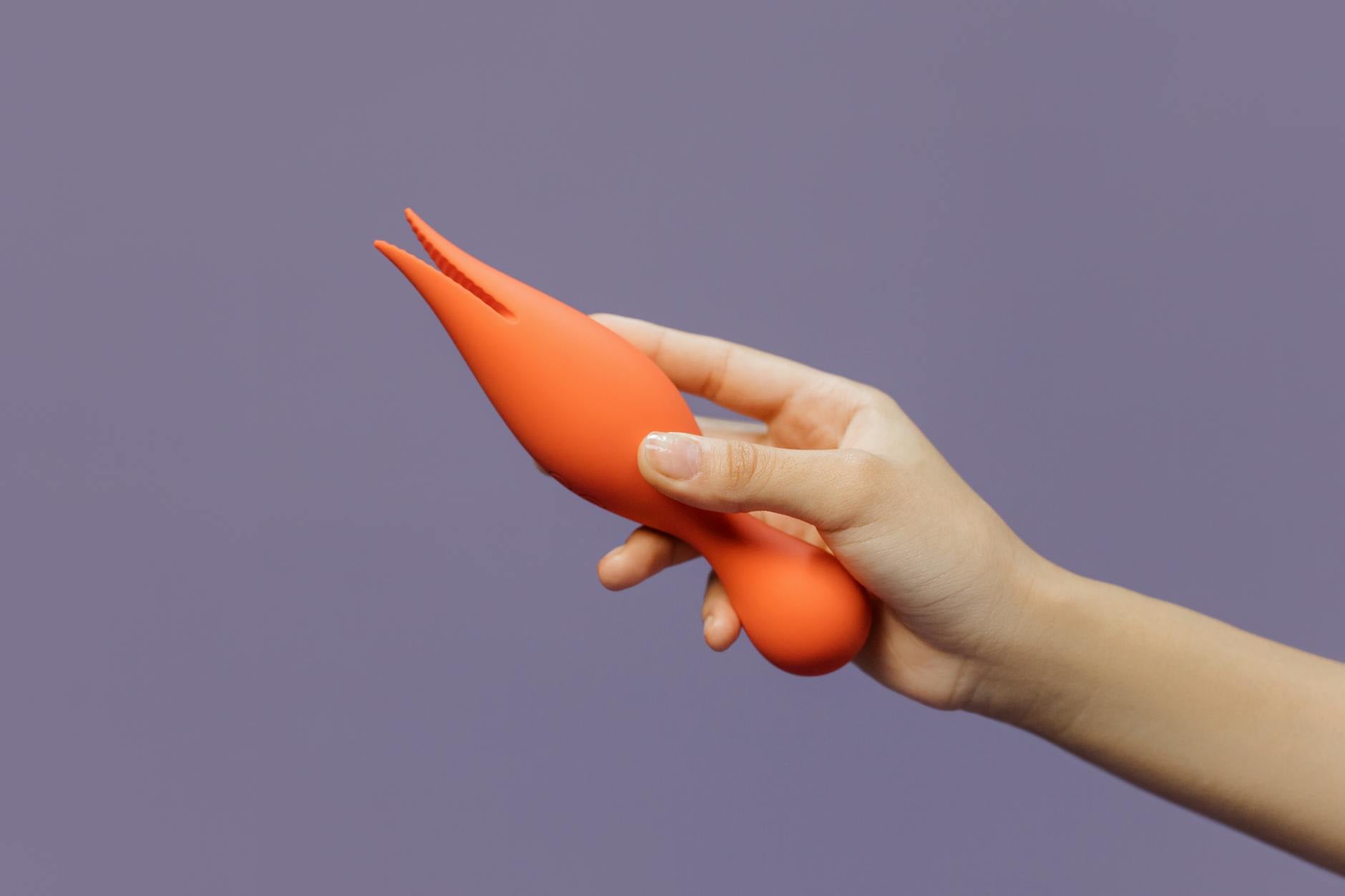
How to Use a Lemon Vibrator on Sensitive Tissue After Hormonal Changes
When your body shifts with hormones, your clitoral vibrator technique needs to shift too. Here's the exact approach that works when tissue feels thinner, more tender, or reactive.
Hormonal shifts alter tissue thickness, blood flow, and nerve sensitivity. This isn't a rumor or a vague discomfort. It's measurable physiology. The lining of your vulva, vagina, and clitoris becomes thinner when estrogen drops. That means what felt perfect at pattern 5 last year might feel sharp or overstimulating now. Same toy, completely different experience.
Three things happen at the tissue level after hormonal changes like perimenopause, postpartum, or hormonal contraceptive shifts.
First, the epithelial layer thins. Your clitoral tissue has less padding underneath, so direct vibration registers more intensely. A lemon clitoral vibrator works through suction and pulsation, which means it's gentler than traditional vibrators in theory. But if you're still hammering pattern 8 the way you did before, you're essentially pressing harder against more sensitive skin.
Second, blood flow patterns shift. Arousal takes longer to build because your tissues aren't engorging as quickly. This means you need a longer warm-up and a slower progression through pressure levels.
Third, your pain threshold changes. This isn't psychological. Thinner tissue has higher nerve density per square millimeter, which means sensation intensifies even when stimulation stays the same.
The solution isn't to abandon your lemon suction vibrator or assume you're broken. It's to relearn the device.
I recommend a minimum of 15 minutes before you touch your clitoral vibrator. This isn't foreplay with a partner's hands. This is solo touch, arousal building, exploration. Your tissue needs time to become engorged and ready.
Use your fingers first. Trace the outer labia, the inner folds, around the clitoral hood. This does two things: it directs blood flow where you need it, and it signals to your nervous system that pleasure time is happening. Then spend 5-10 minutes on external touch only, building arousal without the toy.
When you finally pick up your lem vibrator, your tissue will be plumper, more resilient, and ready for sensation without pain.
Lemon vibrators have a reputation for comfort, and they earn it because the suction technology doesn't require you to press hard against your body. But habit kicks in. You reach for patterns 6, 7, 8 because that's what worked before. Stop.
Start at pattern 1 or 2. Honestly, pattern 1 is your friend here. The sensation should feel gentle, almost teasing. If it feels like nothing is happening, don't jump to pattern 3. Instead, adjust positioning. Move the toy slightly, try different angles against your clitoris, pause and let sensation build.
Most people who report numbness or overstimulation with their clitoral vibrator are actually using too much pressure, too fast. Your nervous system needs the graduated approach more than it did before.
With hormonal tissue changes, the angle of contact matters way more than the power level. This is where a lemon vibrator's design actually becomes valuable. The broader, softer suction head means you can experiment with how it meets your tissue without feeling like you're fighting a rigid device.
Try positioning the vibrator slightly off-center from your clitoris, nestled into the fold between your clitoris and inner labia. This distributes sensation across a wider area, so it feels less intense but still pleasurable. Move it around slowly. Your tissue might respond better to contact on one side of your clitoris than directly on top.
If direct contact feels too much, cover your clitoris with your clitoral hood and apply the vibrator over the hood rather than under it. This muffles sensation while keeping the technology working.
Thinner tissue deserves lubrication, not because you're broken, but because friction without adequate slip can cause irritation. Use a water-based lubricant generously. Apply it to your vulva and to the contact surface of your lem vibrator.
Water-based lubes require reapplication more often than silicone-based ones, but they're safer with silicone toys. Reapply every few minutes if sensation starts feeling sticky or uncomfortable. This small detail transforms the experience from uncomfortable to seamless.
Lemon clitoral vibrators come with multiple patterns. Most people find one pattern they love and stick with it. When tissue sensitivity shifts, this is your moment to explore the patterns you previously skipped.
If you always used pattern 5 because it felt right, try patterns 1 and 3 now. Patterns are rhythmic, which means your nervous system processes them as less intense than steady vibration. Rhythm also builds pleasure in a different way. A pulsing pattern at level 4 might feel more satisfying than steady vibration at level 2.
Spend time with each pattern. Notice which ones build arousal gradually, which ones feel too abrupt, which ones surprise you with intensity. Your tissue is smarter than you are. Trust what it responds to.
When tissue sensitivity is high, overstimulation happens faster. The feeling is real: a kind of buzzing numbness, a sudden loss of sensation, or a sharp discomfort that makes you want to stop.
If this happens, pause. Don't power through. Remove the toy, breathe, and wait. Often, 2-3 minutes of rest resets your nervous system. Then you can resume with lower intensity.
If it happens repeatedly with every session, you're still using too much pressure. Drop down one more pattern level. Yes, really. Patience here pays off with way better orgasms in the next 2-4 weeks as your tissue adapts and your nervous system learns the new rhythm.
If you still cycle, or if hormonal fluctuations affect you, tissue sensitivity isn't constant. A few days before your period, sensitivity might spike. Mid-cycle, you might tolerate higher intensity. This is worth tracking.
Try using your lemon vibrator consistently in one phase of your cycle first, then once you find a pressure and pattern that works, test the same settings in another phase. You might discover you need two slightly different approaches. That's normal and fixable.
If pain persists even with these adjustments, if sensation is completely absent, or if you're noticing unusual discharge or irritation, check in with a gynecologist. Genitourinary syndrome (changes in tissue health after hormonal shifts) is real and treatable. A topical estrogen cream prescribed by a doctor can shift your experience in weeks.
Hormonal sensitivity isn't permanent. It's a season. With the right pressure settings and patience, your lemon vibrator becomes comfortable again, and often more pleasurable than before because you finally understand your body's actual needs.
No. Hormonal shifts do change tissue, but the changes are reversible or adaptable. Even in perimenopause and menopause, your nervous system and your capacity for pleasure don't disappear. The sensation might be different, but with adjusted technique and sometimes medical support, your lemon vibrator can feel better than ever.
Not necessarily. The lemon clitoral vibrator is actually one of the gentler options because suction spreads sensation across a broader surface rather than focusing it at a point. The issue is usually technique, not the device. Try adjusting pressure and patterns before switching toys.
Most people find a comfortable approach within 2-4 sessions once they lower intensity and lengthen warm-up time. Some notice improvement within days. If you're still struggling after two weeks of consistent adjustment, that's when medical consultation might help identify whether something else is contributing.
Yes, and it means you're using too much pressure or haven't warmed up enough. The suction technology should feel like a gentle pull, not a pinch. If it feels sharp, pause, reapply lubricant, and use a lower pattern. Adjust positioning slightly. Sharp pain is your body saying the current setting doesn't match your current tissue.
Absolutely. You might find that pattern 5 works mid-cycle but pattern 2 is better a few days before your period. Track what works when. This knowledge becomes valuable for long-term comfort and pleasure.
That's a conversation with your doctor, not something to decide alone. Topical estrogen is highly effective and has minimal systemic absorption. If tissue sensitivity is severe or paired with pain, it's worth asking your gynecologist about. It can make a real difference, often within weeks.