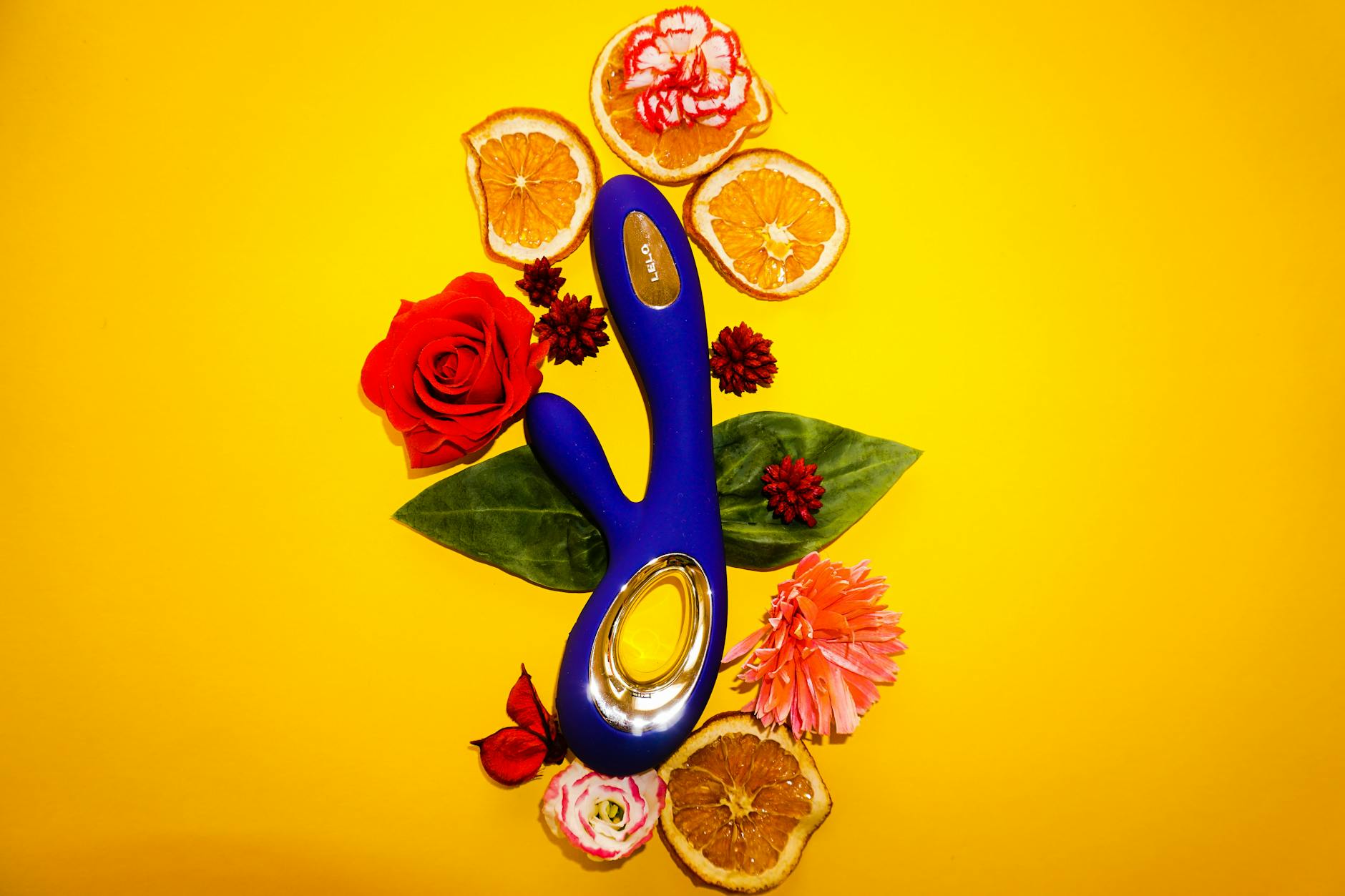
Let's be real about your cycle and pleasure
Your body doesn't feel the same every day of your cycle. That's not drama or overthinking. That's physiology. Estrogen and progesterone fluctuate, blood flow changes, and your nerve endings respond differently depending on where you are in your menstrual cycle. Which means your favorite lemon vibrator, your favorite sensation, even your favorite orgasm might feel different week to week.
Most people never talk about this connection. We talk about cycle syncing for workouts and meal prep, but rarely for pleasure. That's a gap worth closing.
The follicular phase: higher sensitivity, faster build
This is the phase from your period's end through ovulation, usually around days 5 to 13 of your cycle. Estrogen is rising. Your clitoris is engorged with blood, tissue is plump, and nerve endings are firing more readily.
What this means for your lemon vibrator experience: everything hits faster. You'll likely reach arousal quicker, and your orgasms might be stronger or more readily achieved. Some people find they can climax more easily on lower intensity settings. Others discover they want deeper, longer sessions because sensation feels richer.
This is the ideal time to experiment with new patterns or intensities on your Lem. Your body is primed for it. You might also notice that you want longer warm-up time is actually less necessary. Your body does some of the warming up for you.
If you're someone who uses a lemon clitoral vibrator with consistent foreplay, the follicular phase is when foreplay might feel less critical. Not skippable, but lighter.
Ovulation: peak sensitivity and intensity
Right at ovulation (typically day 14), estrogen peaks. Your clitoris is at maximum engorgement. Libido surges. This is often when people report their most intense orgasms.
During ovulation, you might find that your lemon vibrator settings need adjustment. What was comfortable last week might feel too intense this week. Conversely, some people find they want more intensity because sensation is heightened across the board.
This is the phase to notice: pay attention to what your body actually wants, not what it wanted two weeks ago. Your desire and your sensation capacity are both at peak. That's a powerful combination, and it deserves attention.
The luteal phase (early): still strong, but changing
Post-ovulation through the start of your next period (days 15 to 28, roughly), progesterone rises and estrogen falls. This is when things start shifting.
In the early luteal phase, sensitivity is still relatively high, but it's beginning to taper. You might need slightly higher intensity or longer sessions to reach the same sensation you felt two weeks prior. Some people describe this as needing a bit more "oomph" from their lemon adult toys.
You might also notice that your body wants more time to warm up again. Why lemon clitoral vibrators require warming up for best results becomes especially relevant here. Progesterone can slow your arousal ramp, so budget 15 to 20 minutes of buildup instead of 10.
The luteal phase (late): pre-period dip
The last few days before your period, progesterone drops sharply. This is when the most noticeable sensitivity decline happens.
You might feel like sensation is muted. Your clitoris is less engorged. Reaching orgasm might take longer or feel less intense. This isn't dysfunction. It's not you losing interest in your lemon vibrator. It's hormones doing their job.
Honestly though, some people report that this phase is exactly when they want to use their vibrator most. Lower sensitivity paired with higher emotional need for pleasure can create a compelling reason to slow down, use lower settings, and spend quality time with yourself. There's no wrong answer here.
If you're someone who experiences numbness or low sensitivity in general, the late luteal phase might feel familiar. The same strategies apply.
Your period: pain management and pleasure
Some people have zero interest in pleasure during their period. Some find it helpful for cramp relief. Both are completely valid.
If you do want to use your lem vibrator during menstruation, two things matter. First, lower intensity is usually better. Your pelvic floor is already engaged with cramping and contractions. Adding aggressive vibration can amplify discomfort rather than ease it.
Second, suction-based vibrators like the Lemon often feel better during your period than traditional vibrators. The pulsing sensation can feel soothing for cramped muscles rather than irritating.
Photo by Madison Inouye on Pexels
How to track your own patterns
Your cycle isn't identical to anyone else's. Hormonal birth control changes everything. PCOS, endometriosis, and other conditions shift the baseline. So tracking your own patterns matters more than remembering some generic cycle map.
Start simple. For two cycles, notice three things: What day did you reach orgasm most easily? Which settings felt best? Did your preferred intensity change?
You don't need an app or a chart. Just mental notes. By cycle three, patterns emerge. Maybe you always want lower settings during days 20 to 28. Maybe ovulation is when you experiment with higher intensities. Maybe your period is when you prioritize gentle suction over vibration.
Once you know your own map, you can plan accordingly. Want to have mind-blowing sex with a partner on a specific day? Aim for your ovulation window. Expecting lower sensitivity next week? Adjust your settings ahead of time instead of getting frustrated mid-session.
Hormonal birth control and the cycle question
If you're on hormonal birth control, your cycle is suppressed or artificially flattened. You won't experience these shifts because estrogen and progesterone are chemically regulated.
Some people on birth control report more consistent sensation week to week. Others find they want less frequent or lower-intensity pleasure overall because hormonal suppression dampens desire alongside sensation.
If you're currently on birth control and thinking about stopping it, or vice versa, pleasure sensitivity is a real adjustment factor. It's worth discussing with a partner and giving yourself grace through the transition.
The emotional layer underneath the hormones
Hormones are real, but they're not the whole story. Stress, relationship dynamics, work, grief, and mental load all modulate sensation. During the luteal phase, if you're carrying a lot of emotional weight, that dampens pleasure more than progesterone alone ever would.
This is why tracking your cycle and noticing patterns is useful. If you consistently want less pleasure during weeks three and four of your cycle, progesterone might be part of it. But so might the fact that those weeks are often when life gets busier or when work deadlines pile up.
Separating the physical from the emotional is hard. They're tangled. But paying attention to both means you can support yourself better. Some nights you need your lemon vibrator and ten minutes alone. Some nights you need a conversation with your partner. Most nights you need both.
FAQ: cycle, sensitivity, and your lemon vibrators
How can I tell if I'm in my follicular or luteal phase?
The easiest marker is ovulation. If you track when you ovulate (many people notice a slight temperature shift, cervical fluid change, or use an ovulation predictor), everything before that is follicular, everything after is luteal. If you don't track ovulation, day one is your period's first day, and ovulation typically happens around day 14, give or take. The second half of your cycle is luteal. Remember: actual cycle lengths vary wildly, so this is a rough map, not a law.
Can I use my lemon clitoral vibrator every day?
Yes, but your experience will shift. Using it daily during your follicular phase might feel satisfying every single time. During your late luteal phase, you might find the same frequency feels less rewarding. That's not an invitation to stop using it. It's an invitation to notice that pleasure doesn't have to look the same every day. Some days five minutes on low intensity is perfect. Some days 20 minutes on high intensity is what you need. Both are fine.
Does cycle sensitivity affect orgasm intensity?
Completely. Many people report that follicular and ovulation orgasms feel stronger or more full-body, while luteal phase orgasms feel more localized or subtle. That doesn't make them less valuable. A quieter orgasm is still an orgasm. Some people actually prefer the subtlety of luteal phase pleasure because it requires more attention and intention.
What if my sensitivity doesn't match the typical cycle pattern?
Then your pattern is your pattern. Not everyone fits the textbook. Hormonal conditions, medications, stress, and individual neurology all create variation. Skip the guilt. Notice what's true for your body, and work from there. If you want to explore further, a conversation with a menstrual cycle specialist or sexual health provider can help identify whether something worth investigating is at play.
Should I tell my partner about my cycle sensitivity changes?
If you're partnered, yes, but frame it practically rather than apologetically. "I'm noticing my body responds differently at different points in my cycle" is useful information. It means you might want different touch, intensity, or timing depending on the week. That's not a limitation. It's just information that makes partnered pleasure better for both of you.
Can cycle syncing for pleasure actually improve my sex life?
If you mean: does awareness of your cycle help you get better orgasms and feel more in tune with your body? Absolutely. Does it mean you can only have good sex on certain days? No. The point of tracking is to feel less confused and more intentional, not to create a restrictive rulebook. Use the knowledge to support yourself. That's the whole thing.
The real takeaway
Your body isn't broken if it feels different week to week. Your lemon vibrator isn't less effective if it hits differently on day 10 versus day 24. You're just cycling. Acknowledging that means you stop chasing the same experience every single time and start building flexibility and curiosity into your pleasure instead.
Your cycle is information. Use it. And if you want to dig deeper into how your body responds to different touches and intensities throughout the month, that's worth the attention. That's when pleasure gets really interesting.
Ready to explore what works for your body? Reach out to us if you have questions about your own patterns or how different lemon vibrators might fit your cycle.