The roommate trap is real, and it sneaks up on you
One day you're a couple. Then you're coparenting, coordinating schedules, dividing household labor, and suddenly you're passing each other like ships. You know the person next to you intimately, and you don't know them at all.
This isn't about desire disappearing. It's about touch disappearing. When physical connection gets swallowed by logistics, rebuilding it feels impossibly awkward. You can't just announce "let's have sex again." It doesn't work like that.
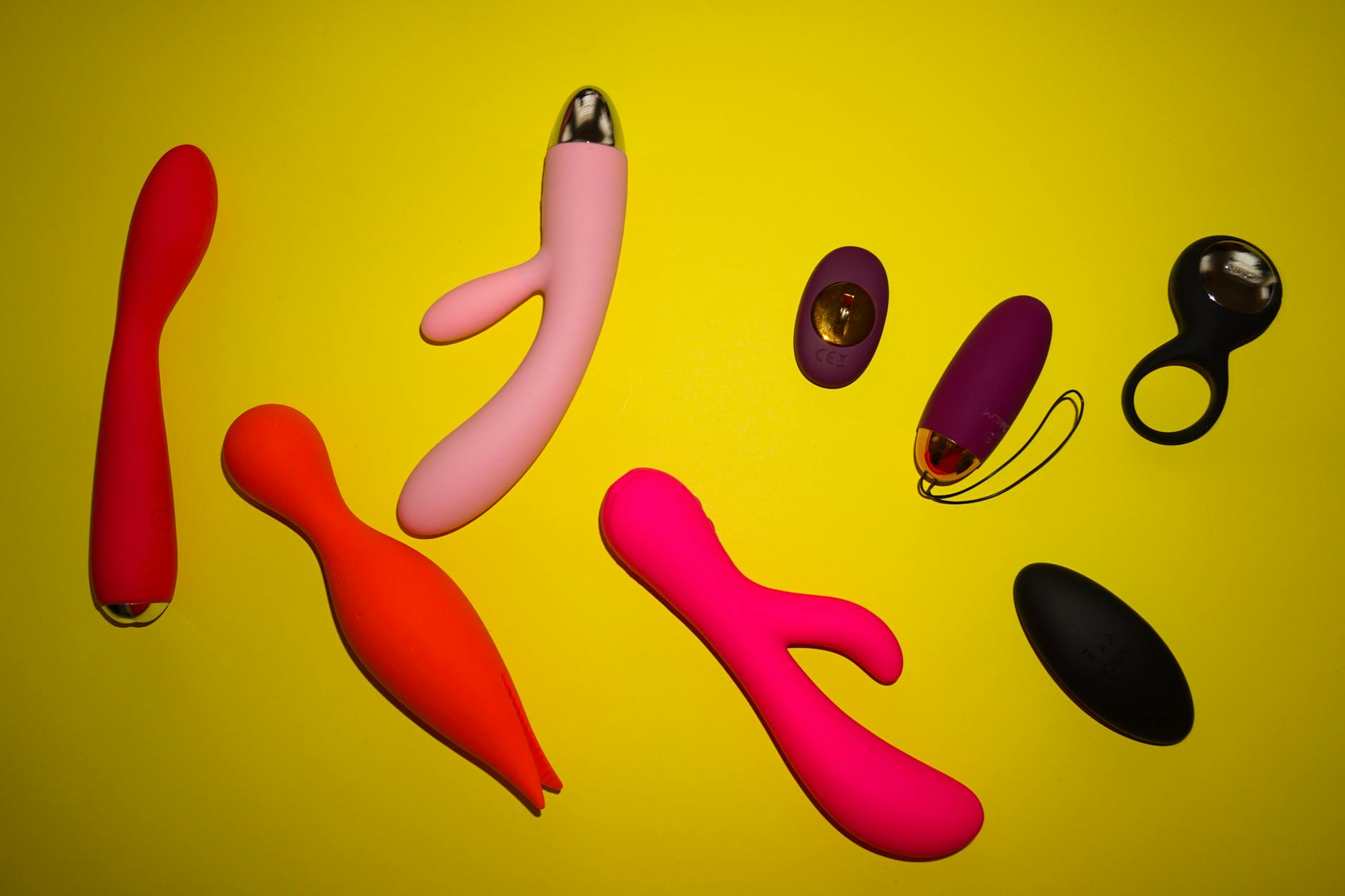
Here's what I've seen work in my practice: lemon vibrators create a permission structure for touch that feels less loaded than traditional sex. They're small, manageable, and they shift the conversation from "we need to fix our sex life" to "let's explore something new together."
Why this matters more than you think
When couples describe feeling like roommates, what they're usually missing isn't sex. It's novelty and safety at the same time. You need to feel safe enough to be vulnerable, and you need something different enough to interrupt the pattern.
Research on long-term relationships shows that couples who introduce new activities together (not necessarily new partners or complex fantasy scenarios, just new ways of touching) report faster reconnection than those who try to return to old patterns. The newness resets the nervous system. Lemon vibrators do exactly that because they're different, but they're also contained and non-threatening.
There's also a practical angle. When one partner has given up on desire because they're exhausted, overwhelmed, or just numb from routine, a vibrator can jumpstart arousal without requiring them to generate it from nothing. That's not cheating. That's being smart about neurochemistry.
How to introduce this without it feeling clinical
This is the part most guides skip, and it's the hardest part. You can't hand someone a lemon vibrator and say "we need this." That reads as criticism. Here's what actually works.
Start in conversation, not in the bedroom. Pick a calm moment when you're not about to have sex and you're not angry. Something like: "I miss touching you. Not just sex, but that feeling of discovering each other. I found this thing that feels interesting to me, and I wondered if you'd want to try it together."
That's honest. It names what's missing. It's specific enough that it doesn't feel like blame.
If your partner resists, don't push. Resistance usually means fear, not rejection. Fear of being judged for what they enjoy, fear of failure, fear of intimacy returning and then vanishing again. Name that. "I'm nervous too. But I think it's worth trying."
What to expect the first time
Let's be practical. The first time you use a lemon vibrator together after years of disconnection, it might feel awkward. You might laugh. You might feel self-conscious. That's fine. That's actually good because it breaks the tension.
Start with exploration, not performance. One person holds the vibrator. The other explores where and how they want to be touched. No agenda. No timeline. Your job is to stay curious, not to achieve an orgasm.
Many people find that how lemon vibrators offer better clitoral control than bullet vibrators makes the experience feel less mechanical and more responsive. The suction sensation is different from traditional vibration. It feels like attention. It feels intentional.
If you're using a clitoral vibrator for the first time, start at the lowest setting. Don't aim for the center of the clitoris immediately. The inner thighs, the labia, the mons pubis, the hood. Slow down. Remember that after months or years without this kind of touch, sensitivity is heightened. Too much, too fast, too direct causes shutdown, not arousal.
The psychological shift this creates
Here's what I tell couples: lemon vibrators give you permission to be selfish about pleasure again. When you've been operating as a logistics team, you've learned to dismiss your own needs. Pleasure becomes something that happens to other people, not you.
Using a vibrator together reactivates that part of your brain that remembers you deserve attention. And because your partner is involved, they get to see that you deserve attention. That's the reversal that matters.
It also gives you something to do together that isn't watching a show or discussing mortgage payments. It's presence without conversation. It's touch without the weight of performance.
Making this a bridge, not a destination
Some couples worry that introducing a vibrator means they're replacing each other. That's a misunderstanding. A lemon vibrator isn't an alternative to your partner. It's an invitation to them.
After the first few times, expand the exploration. One partner uses the vibrator on the other. Then they switch. Then try it together with other kinds of touch. When you've been disconnected, the vibrator is often the entry point. But the goal is to reconnect as people, not as users of a device.
You might find that using a clitoral vibrator in partnered sessions actually increases desire for partnered sex because arousal is returning. The vibrator isn't the endgame. It's the ramp.
When this approach hits resistance
If your partner genuinely refuses, that's information too. It might mean they're not ready to reconnect. It might mean there's resentment that needs addressing before any tool will help. Couples therapy often makes sense at this point, not because the vibrator failed, but because the resistance is pointing to a deeper block.
The lemon vibrators from My Lemon Suction are designed to feel approachable and less intimidating than larger devices, which sometimes helps with partners who are hesitant. But no vibrator can substitute for the actual hard conversation about what happened to the connection. The vibrator is the opening. The conversation is the work.
The timeline for rebuilding
Don't expect instant chemistry. Reconnection takes weeks, sometimes months. The first few sessions with a vibrator might feel strange or disappointing. That's normal. Your nervous system is recalibrating. Keep going.
After 3-4 sessions, most couples report a noticeable shift. Touch becomes less fraught. Laughter returns. The vibrator becomes less novelty and more a natural part of how you explore each other.
Many of my clients describe the process as "remembering I liked this person." Not just liking them as a life partner, but finding them attractive again. That's when you know the vibrator did its job. Then you can decide where to go from there.
Questions couples actually ask
What if one of us finishes and the other doesn't?
Switch focus. If one person has an orgasm, great. Then turn the vibrator on the other person. The point isn't synchronized finishing. It's that you're both receiving attention. That's the novelty for couples who've been disconnected.
Does using a lemon vibrator mean our sex is broken?
No. It means you're choosing to try something different. That's the opposite of broken. Broken would be staying frozen in disconnection because you're embarrassed to try something new. Healthy is being willing to experiment to rebuild what matters.
How do I know when we're ready to stop using it?
You don't have to. Some couples use lemon vibrators regularly for years because they enjoy it. Others use them as a reentry tool and then shift back to other kinds of touch. There's no timeline. Let pleasure be your guide.
Is it weird to use a vibrator if we've been together for 20 years?
Weird is relative. Twenty years without novelty is weirder than trying something new together. And honestly, some of my longest-married couples report their best sex after introducing vibrators. They stopped performing for each other and started playing with each other. That shift changes everything.
Can lemon vibrators work if one partner is on antidepressants?
Sometimes medication dampens sensation, which makes a lemon clitoral vibrator especially useful. The suction sensation often cuts through numbness better than traditional vibration. But if medication is causing total desire shutdown, that's a conversation for your doctor, not something a vibrator solves alone.
What if we tried this and it made things worse?
That usually means there's anger or resentment that needs processing first. The vibrator didn't cause the problem. It just brought the problem into focus. That's when you consider couples therapy. A vibrator can build bridges, but it can't demolish walls on its own.
The reentry you've been waiting for
Feeling like roommates doesn't happen because you stopped loving each other. It happens because the day-to-day swallowed touch. Lemon vibrators are a practical, low-pressure way to resurrect that part of your relationship.
They're not a solution to deep incompatibility or infidelity. But for couples who've simply drifted, who miss each other but don't know how to say it, they're often exactly the permission slip you need.
Start with honesty. Stay curious. Let pleasure be the guide. That's how roommates become partners again.