Here's what nobody tells you about partner play with a lemon vibrator
Using a clitoral vibrator alone is one conversation. Using it with a partner is completely different. The pressure, the rhythm, the settings you prefer solo might feel overwhelming or weirdly tame when someone else is holding the device. That shift isn't random. There's actual physics and psychology happening.
Why solo settings don't translate to partner play
When you're using a lemon vibrator on yourself, you have total control. You know exactly how much pressure feels good at any given second. You can adjust the angle, the placement, the intensity without thinking about it. Your body's feedback loop is instant and intuitive.
Now add a partner. That control moves outside your body. Your partner can't feel what you're feeling from the inside. They're reading your facial expressions, listening to your breath, watching your hips, making micro-adjustments based on external cues. That's valuable, but it also means the device often ends up at a higher or lower intensity than you'd naturally choose for yourself.
Research on partnered sexual activity shows that communication about intensity is one of the top areas couples skip over. We talk about whether we want to use toys, but we rarely talk about how. That gap creates a lot of awkwardness.
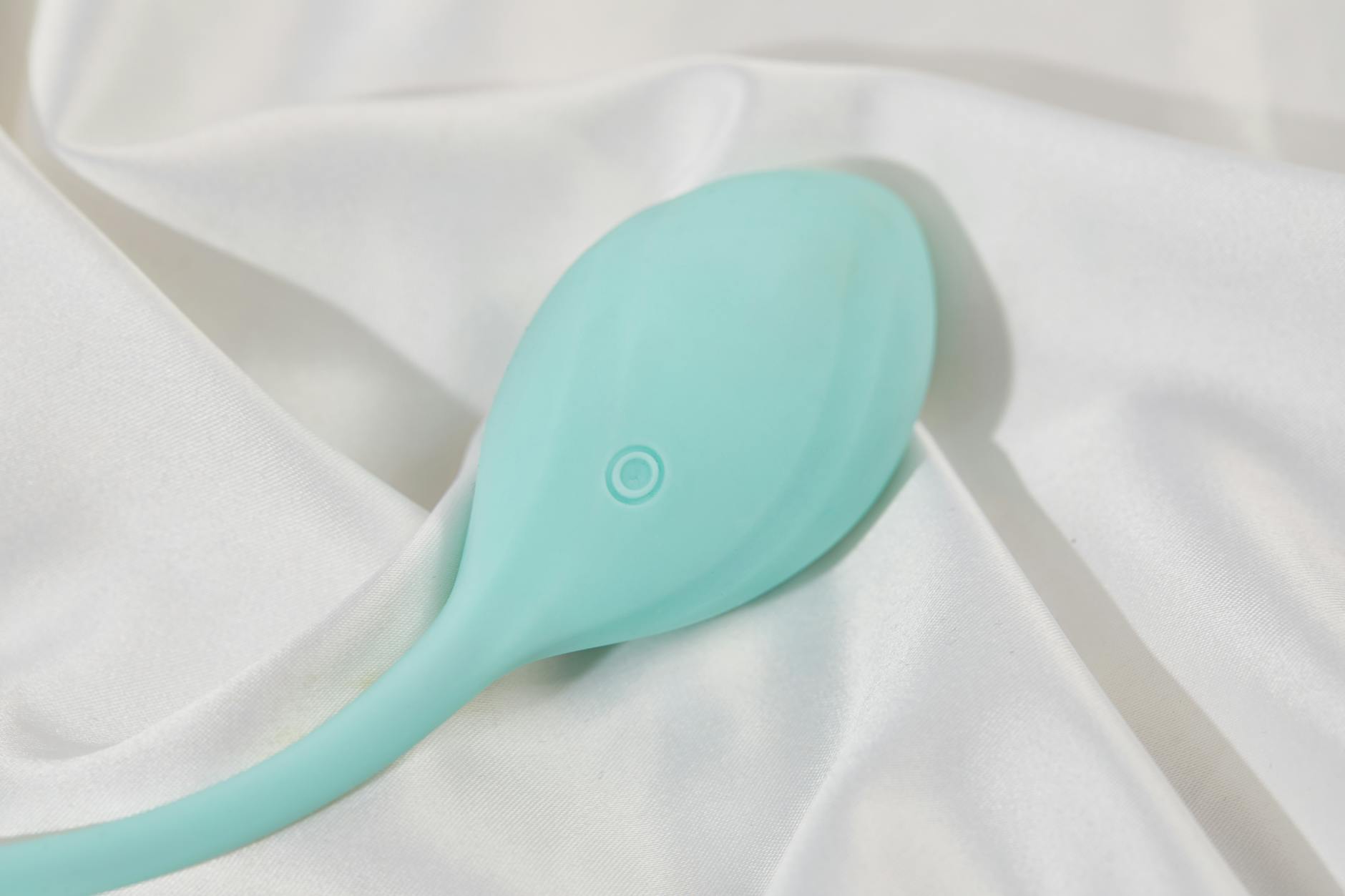
Photo by IFONNX Toys on Pexels
The specific pressure problem with air-suction toys
A lemon vibrator works through gentle suction combined with vibration. That's different from a traditional vibrator, which relies purely on internal vibration. Suction is more sensitive to positioning and angle. When you're controlling it, you instinctively find the sweet spot. When a partner is controlling it, they might sit slightly too high, too low, or apply more pressure than feels good.
The pressure sensitivity thing matters a lot here. Too much suction pressure can feel overwhelming on sensitive tissue. Too little and you're not getting the stimulation you need. The range is narrower than people expect, usually about 2-3 intensity settings out of a typical 5-setting range on a lemon clitoral vibrator.
Most partners start at setting 4 or 5, thinking more intensity equals more pleasure. It usually equals more numbing or discomfort. This is preventable if you just talk about it beforehand.
Where to actually start with a partner
Think of pressure settings in three zones instead of five individual levels.
Zone 1 (Settings 1-2): Warm-up mode. This is where you should almost always start with a partner, regardless of where you usually go solo. The lower settings let your body and their hand adjust to each other. They can feel how your body responds. You can signal what's working. After five to ten minutes here, you'll both have real information instead of guessing.
Zone 2 (Setting 3): The Goldilocks zone. For most people, this is where partnered play feels best. It's strong enough to build sensation without the overwhelm. This is the setting I'd recommend as your baseline target. Spend most of your time here.
Zone 3 (Settings 4-5): The finish line. Save these for the last few minutes when you know exactly what your body wants. Even then, let your partner know before they go higher. "I want to try 4 now" is a sentence that should exist in partnered toy play and rarely does.
Communication that actually works
Here's the thing about talking during sex. It feels awkward in theory and then immediately normal in practice. The awkwardness disappears the second you actually do it.
Before you start, say something like: "I want to try this starting lower than I normally do solo. Can you start at setting 1 and we'll move up together?" That's it. You're not having a therapy session. You're giving logistical information.
During play, real-time feedback beats post-game analysis. "A little to the left" or "Stay right there" or "Softer" tells your partner what's working in the moment. If you're the partner holding the toy, ask for this feedback. "Does this angle feel good?" or "Want me to go higher?" invites communication naturally.
After, skip the "was that okay?" and instead say something like "That felt really good at setting 3. I want to try setting 4 next time." You're building a map together of what works. That map gets more detailed and more useful every time.
The pacing problem partners usually mess up
Most people move through intensity settings too fast. They hit setting 1, feel a little sensation, think "that's not much," and jump to setting 3. Then they wonder why their partner suddenly looks uncomfortable.
Building sensation is about time, not just power. Five minutes at setting 2 creates a different kind of arousal than 30 seconds at setting 2. Your nervous system actually needs the runway. This is especially true if you've never used a lemon clitoral vibrator with a partner before.
Your partner's job is to stay curious, not to rush. That means: start low, stay there longer than feels intuitive, watch and listen for what's actually working, then move up only when it makes sense. This is not foreplay anymore. This is the main event. It deserves the time.
Pressure and pleasure are not the same thing
Here's something worth noting. Louder or stronger doesn't equal better. I've worked with couples who assumed their partner wanted maximum intensity because that's what they see in porn. Actual bodies are wildly different. Some people get the most pleasure from consistent, moderate pressure. Others like building intensity. Others prefer steady settings with rhythm changes instead of intensity changes.
The only way to know what your partner actually wants is to ask and then pay attention to the answer. This sounds obvious when I write it. In practice, a lot of couples skip this step entirely.
One concrete thing: if your partner has sensitive skin, they might need even lower starting settings than the general guidance. Conditions like eczema or dermatitis mean the tissue is more easily irritated. Suction on already-sensitive skin at high settings can cause discomfort or minor injury. Start at setting 1 and go slowly. If anything feels uncomfortable, stop and try a different angle or lower intensity.
When pressure preferences change
Something else I see a lot. A partner might prefer certain settings at different times of their cycle, during different times of their life, or simply because their preferences shift. This isn't constant. What felt amazing at 35 might feel like too much at 40. That's normal. That's also why the conversation can't be a one-time thing.
If your partner suddenly says a setting feels different, believe them. Don't argue. Bodies change. Preferences change. A lemon vibrator that worked perfectly last month might need adjusted settings now. This is why communication before, during, and after matters.
What to avoid (the pressure mistakes I see most)
Don't assume higher pressure means your partner is more aroused. They might actually be numb or uncomfortable and not saying anything because they don't want to disappoint you.
Don't skip the warm-up phase. I know it feels slow. That's the point. Slow creates better sensation and better communication.
Don't use a lemon suction toy at maximum intensity for extended periods without checking in. The delicate tissue can become temporarily sensitive. Your partner might not tell you immediately. Check in.
Don't treat the settings as one-way. If your partner says "lower," go lower without comment or question. This isn't a negotiation.
Don't assume you know what they want based on past experience with someone else. Every body is different. Every pressure preference is specific.
Making pressure settings a conversation, not a technical problem
The best couples I've worked with treat this like any other shared preference. You talk about what temperature you like the shower, what level of detail you want when your partner tells a story, how much space you need after a stressful day. Pressure settings on a clitoral vibrator are just one more thing to know about each other.
Start the conversation early. Start before you're in the moment. Say something like: "I've been thinking about trying my lemon vibrator together, and I want to figure out what feels good for you." That invitation opens a door. Most partners will walk through it.
And if the conversation feels awkward or your partner seems uncomfortable with toys altogether, that's its own conversation worth having. But that's a different piece. For now, if you're using a lemon vibrator with a partner, remember: lower intensity than solo, more time than you think you need, and communication that happens before, during, and after. Those three things change everything.
FAQ
What pressure setting should I use when introducing a lemon vibrator to my partner for the first time?
Start at setting 1 and stay there for several minutes. This gives both of you time to adjust and creates a lower-pressure introduction. Move to setting 2 or 3 only after you've had feedback that it feels good. Many first-time partner experiences work best at settings 1-3 for the entire session.
Why does my lemon clitoral vibrator feel stronger when my partner uses it than when I use it myself?
Several reasons. Your partner might be applying more pressure than you would naturally. They might also be holding it at a slightly different angle. The angle changes everything with suction toys. Additionally, when someone else is in control, you're experiencing it differently psychologically. Your brain's processing changes. Your body might be in a different arousal state. All of these shift how strong the vibration feels.
Can using a lemon vibrator at high pressure with a partner cause injury or sensitivity?
Yes, it's possible. Extended use at high pressure on sensitive tissue can cause temporary irritation or soreness. This is especially true if your tissue is already sensitive or if you have skin conditions. Start low, check in frequently, and if anything feels uncomfortable, lower the intensity immediately. If irritation persists, take a break for a day or two.
How do I tell my partner I need lower pressure without hurting their feelings?
Frame it as information, not criticism. Say something like "I want to try lower settings with you. I think I'll get better sensation that way." You're not rejecting their effort. You're optimizing for what actually feels good. Most partners feel relieved when you give them clear direction because then they know what they're doing is right.
Does pressure preference change at different times of my cycle or during menopause?
Absolutely. During different phases of the menstrual cycle, tissue sensitivity shifts and arousal patterns change. During menopause, hormonal changes can mean that settings that felt comfortable before now feel too intense. This is normal. Communicate about it when you notice the shift. Your partner needs to know so they can adjust.
Is using a lemon vibrator at setting 3 or lower enough to reach orgasm with a partner?
For most people, yes. Setting 3 provides plenty of stimulation for orgasm when you have the time and the right rhythm. Many people reach their best orgasms at moderate settings because there's less numbness and more sensation. If you're not reaching orgasm at lower settings, it might be a positioning or timing thing rather than an intensity thing. Adjust the angle or spend more time at that setting before moving up.
The real shift with pressure and partners
Using a lemon vibrator during partnered play changes the equation. Solo, you're reading your own body. With a partner, you're translating your pleasure into words and signals and feedback. Pressure settings matter because they're concrete. They're the place where solo preference and partnered reality actually meet. Master that conversation, and everything else gets easier.