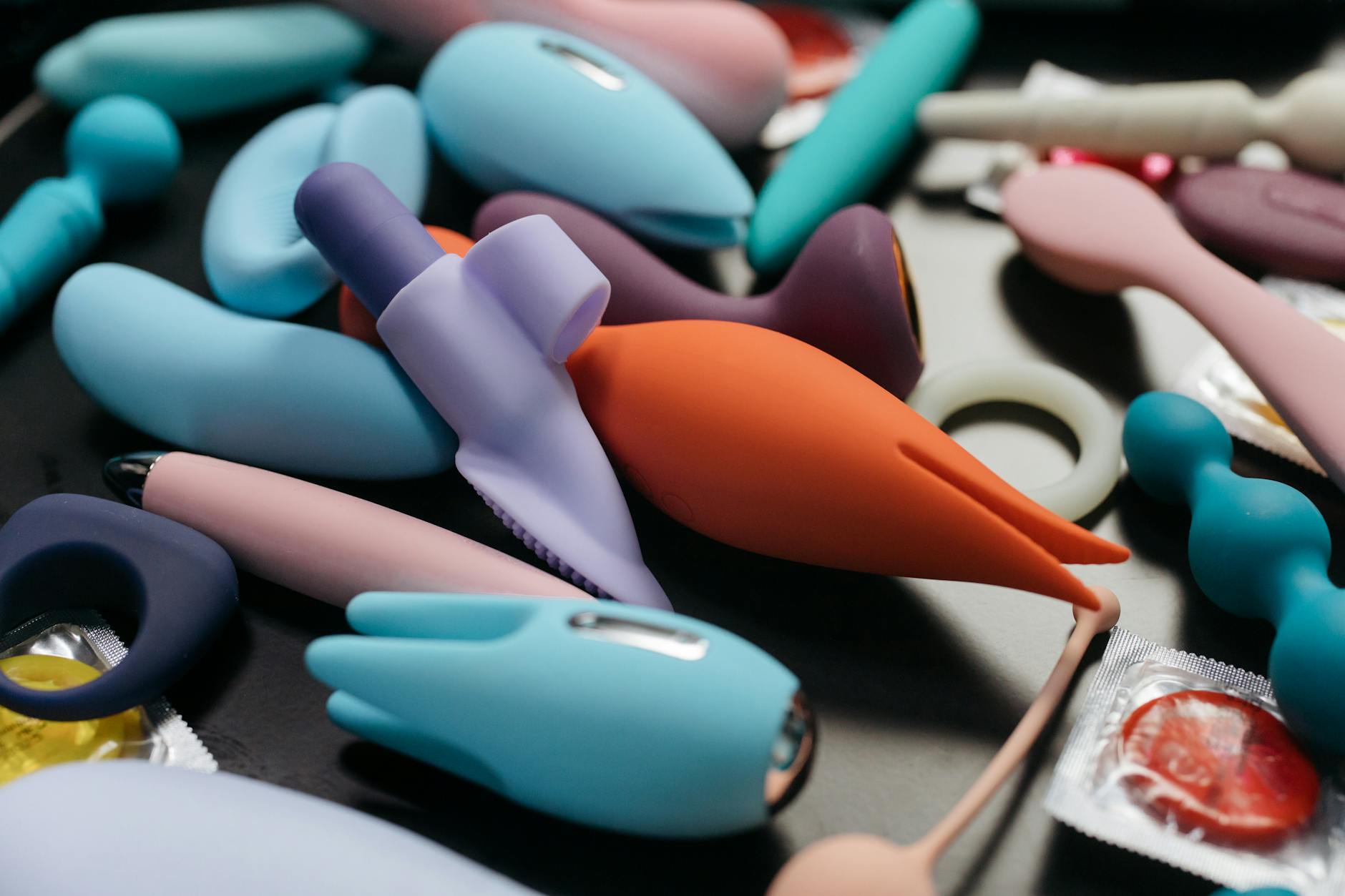
Let's be real about barrier methods and pleasure
Condoms and other barrier methods are non-negotiable for safety. They're also kind of a buzzkill for sensation, and pretending otherwise does nobody any favors. When you add a lemon vibrator into partnered sex with a condom in place, the physics of what's happening between your body and the toy shift in ways that matter.
Here's the thing though. Understanding exactly how sensation changes means you can work with it instead of fighting it.
What barrier methods actually do to sensation
A condom sits between your partner's skin and yours. That's the whole point. But when you're using a lemon clitoral vibrator during penetrative sex, you're not just losing direct skin-to-skin contact. You're losing micro-vibrations that travel through your partner's body into yours.
The vibration from a lemon vibrator travels through your tissue directly. A condom doesn't muffle that the way it muffles penetrative sensation. But here's what does change: your focus. When you're managing a partner inside you plus external stimulation, the cognitive load shifts. You're dividing attention between two sensations instead of concentrating fully on one.
That's not a flaw in the system. It's actually useful information.
Why lemon vibrators require different technique with barriers
Three technical shifts happen when you introduce condoms:
1. Pressure needs to increase slightly. Without skin-to-skin contact through your partner, you lose some ambient stimulation. The lemon vibrator needs to work harder to compensate. Most people find they need to use a slightly higher pattern (maybe pattern 3 instead of pattern 2) to reach the same subjective intensity.
2. Positioning matters more. With a partner inside you, your clitoris is naturally more engaged and slightly more engorged. A lemon vibrator that felt perfect solo might feel overstimulating or oddly angled during partnered sex. Angle adjustments (tilting the toy slightly, shifting your hips) become essential tuning mechanisms.
3. Warm-up time shifts. You're getting arousal input from penetration, so you might think you need less warm-up time with the vibrator. Often the opposite is true. Full clitoral engorgement takes time. Adding the vibrator too early can feel scattered instead of building toward something coherent.
The psychological layer (this matters more than you'd think)
Here's what I see clinically: people often blame the barrier method for sensation loss when the real culprit is attention fragmentation. You're tracking your partner's rhythm, managing the vibrator, monitoring your own arousal, and probably thinking about whether you're taking too long. That's a lot of tabs open in your brain.
With a new partner or early in a relationship, barrier methods add psychological load too. There's a tiny bit of self-consciousness about the logistics. That's normal and worth naming.
One surprisingly effective move: talk about the vibrator before sex happens. "I want to use my lemon vibrator with you. Can we plan for it?" Foreknowledge reduces in-the-moment friction. Your partner isn't suddenly learning a new piece of equipment mid-sex. You're both prepared.
Photo by cottonbro studio on Pexels
Specific strategies that work
Start the vibrator before penetration. Get yourself to a good place of arousal and clitoral engorgement with the lemon vibrator first. Then transition to partnered sex. Your tissue is primed, and you're not trying to catch up during penetration.
Use patterns strategically. The Lemon Clitoral Vibrator has multiple vibration patterns. During solo time, you might live on pattern 1 or 2. With a partner and condom, patterns 3 through 5 often deliver what you're looking for because the barrier creates subtle dampening. Experiment. Your preference might shift.
Create a hand signal. If your partner's inside you and you need to adjust the angle or pressure of the vibrator, a simple squeeze or tap lets them know without breaking the rhythm. This sounds mechanical. It's actually freeing because you're not managing someone else's reaction while managing your own sensation.
Extend foreplay. When barrier methods are involved, spending an extra 10 to 15 minutes on external stimulation before penetration isn't procrastination. It's smart pacing. Your clitoris is fully awakened. The vibrator will feel exponentially better.
When sensation loss is actually about something else
If lemon vibrators suddenly feel completely numb with a partner (even after adjusting technique), consider whether something else is at play. Condoms that are too tight or too loose do genuinely dull sensation for everyone. Switching brands or sizes can be revelatory.
But also check the relationship stuff. If you're not fully comfortable with your partner, or you're worried about something, that anxiety gets read by your nervous system as a signal to dampen pleasure. Barrier methods can become psychologically entangled with discomfort that has nothing to do with the condom itself.
How to use a lemon vibrator with a new partner for the first time covers the vulnerability piece more thoroughly.
The efficiency argument (honesty break)
People sometimes ask: with all this extra technique, is it worth using the lemon vibrator with a partner and condom? The answer depends on what you're optimizing for.
If you're chasing orgasm, yes. The vibrator significantly improves the odds. If you're chasing connection or presence, sometimes it's worth dialing back external stimulation and just being with your partner. Both are valid goals.
I often recommend: use the vibrator sometimes. Leave it out sometimes. Notice the difference. There's no wrong answer, only information about what your body and relationship actually want, not what you think they should want.
The frequency question
Barrier methods are typically used because of STI prevention or pregnancy prevention. If you're in a monogamous relationship and using condoms primarily for contraception, you might explore alternatives (IUDs, implants, etc.) with a healthcare provider. Some people find barrier-free sex genuinely changes their lemon vibrator experience because the entire sensory landscape shifts.
That's a separate conversation from today's topic. But it's worth knowing the conversation exists.
Setting realistic expectations
Using a lemon vibrator with a partner who's wearing a condom is not identical to solo use. It's different. Different doesn't mean worse. It means adjusted. You're trading some direct sensation for the experience of partnered pleasure and the specific intimacy of shared vulnerability around contraception.
That swap is reasonable. It's also okay to find it frustrating. Both feelings can coexist.
FAQ: Barrier Methods and Lemon Vibrators
Does using a condom really make a lemon vibrator feel less intense?
No. The vibrator sensation remains constant because the toy contacts your body directly, not through your partner. What changes is the overall sensory context. You're receiving stimulation from two sources instead of one. Cognitively, that's more complex, which can feel like reduced intensity even though the vibrator itself is unchanged.
Can I use a lemon vibrator with a condom throughout an entire session?
Absolutely. The limiting factor is usually hand fatigue for you or your partner, or positioning comfort. Sensation-wise, there's no barrier to continuous use. Many people find a rhythm where they use it for 10 to 15 minutes, then take a break, then use it again.
Will different condom materials change how a lemon vibrator feels?
Yes, subtly. Latex condoms transmit vibration slightly differently than polyisoprene or polyurethane. Some people report that polyurethane condoms (which are thinner) feel marginally better with external vibration. If sensation during partnered play matters a lot to you, it's worth experimenting across materials.
Is it normal to need a higher vibration pattern with a condom?
Yes. The condom creates a micro-layer of distance, and the psychological load of managing multiple sensations simultaneously can require slightly more intensity to reach the same subjective experience. This isn't a sign something's wrong. It's just physics.
Should I use a condom during solo play with my lemon vibrator?
Not unless you have a specific reason (latex allergy sensitivities, certain skin conditions). Solo play is barrier-free. Save that variable for partnered sex so you can actually notice the difference barrier methods make.
What if I still can't finish with a lemon vibrator when my partner's inside me, even with adjustments?
That's common and usually solvable. Check three things: are you adequately warmed up before the vibrator starts (clitoral engorgement takes time), is the vibrator angle actually comfortable for your anatomy in this position, and are you mentally present or are you in your head monitoring performance. Often it's the third one. A conversation with your partner about slowing down and focusing on sensation instead of the end goal shifts everything.
What actually matters
Barrier methods and lemon vibrators coexist fine. What you're really managing is attention. Your clitoris doesn't care about condoms. Your brain does. Once you know that, you can work with your brain instead of working against it.
The rest is tuning. Pressure, positioning, pacing, pattern selection. None of it's complicated. All of it's worth the five minutes it takes to figure out what works for your body and your relationship.
Your pleasure deserves that kind of attention.
Want to deepen the conversation around pleasure, intimacy, and relationships? Reach out to My Lemon Suction. We're here to answer questions, share resources, and support your journey toward partnered pleasure that actually works.