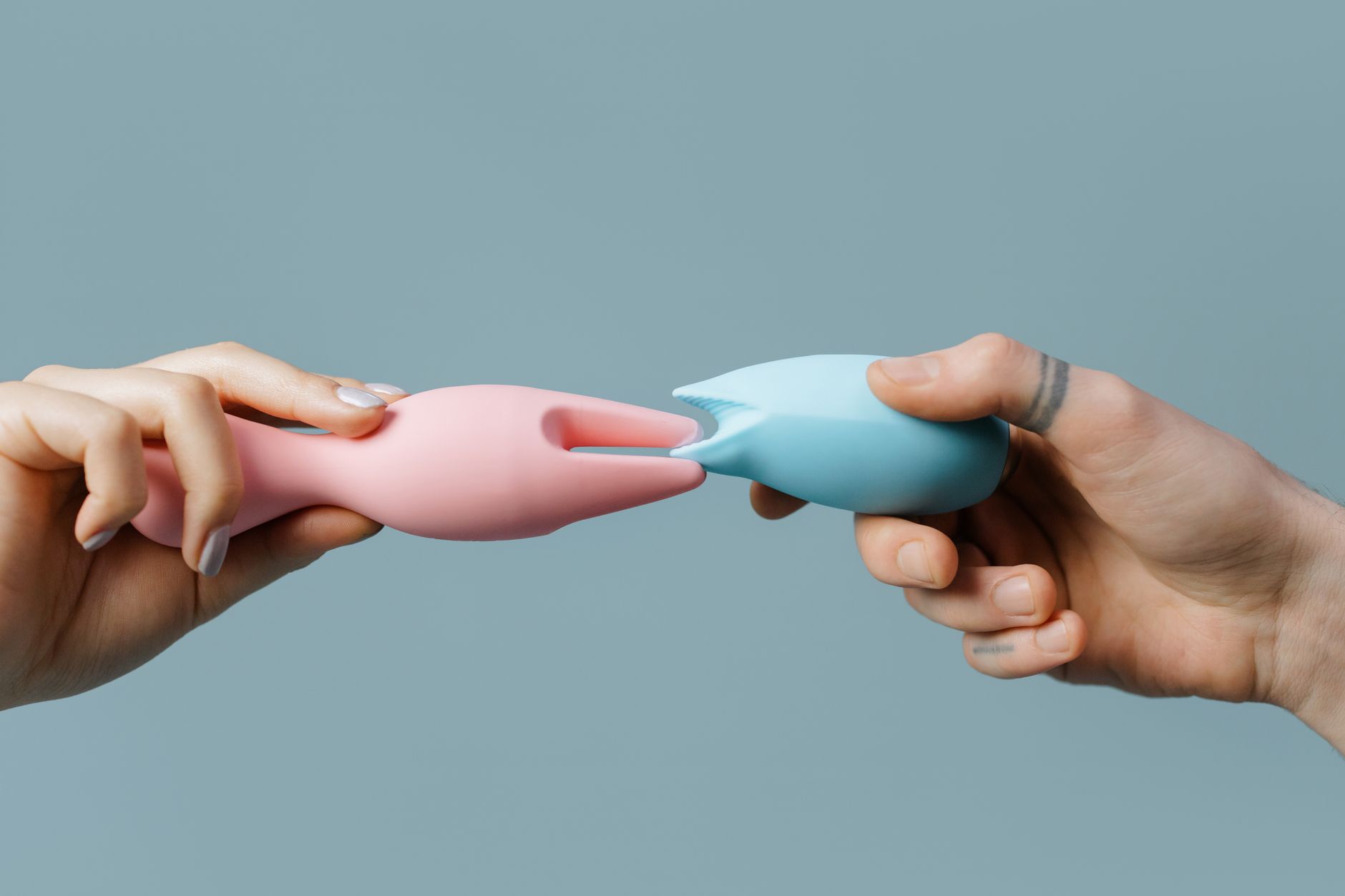
Your partner looks panicked when toys come up. Maybe they think vibrators mean you're not satisfied. Maybe they grew up in a household where pleasure was taboo. Maybe they've never seen one up close and the whole thing feels clinical or threatening. Whatever the reason, their hesitation is real, and pushing through it doesn't lead anywhere good.
Here's what I know from decades of working with couples: the fastest way to kill curiosity is to make someone feel cornered. The second-fastest way is to proceed without checking in.
Most partner hesitation around lemon vibrators and clitoral toys falls into three buckets. First, there's the ego concern: the belief that introducing a vibrator means their touch isn't "enough." This is almost never the case, but the worry is loud and it's worth naming directly. Second, there's cultural or family programming that sex toys equal shame, desperation, or something you hide. Third, they've genuinely never tried one and don't know what to expect, so the unknown feels risky.
None of these reasons require you to abandon the idea. They just require a conversation before anything else.
Don't spring it on them mid-intimacy. Don't leave a vibrator on the nightstand as a hint. Don't use it when they're not looking and hope they'll get curious. Instead, pick a calm moment outside the bedroom and say something direct: "I've been thinking about trying a vibrator with you, and I want to know what you're feeling about that."
Then listen. Really listen. If they say "I feel like I'm not enough," you get to say: "That's not what this is about. I want more sensation, and I want to explore it with you. That's different from wanting less of you."
If they say "I don't know anything about them," offer education instead of pressure. Pull up reviews. Show them how small and quiet modern lemon clitoral vibrators actually are. Watch an instructional video together. Knowledge often dissolves fear.
If they say "I just need time," honor that. "I'm glad you told me. We don't have to rush. Just let me know when you're ready to talk about it again."
Once they've agreed to explore the idea, the next step isn't jumping into bed. It's building familiarity. Suggest looking at them online together. If you own one already, leave it out in the open on your nightstand for a week. Normalize it as an object, not a secret.
When curiosity starts to build (and it often does), invite them to hold it. No pressure to turn it on. Just let them feel the weight, the texture, the shape. This sounds low-stakes because it is, and that's the whole point.
When you're both ready to try it during intimacy, set expectations clearly. Tell them: "I'm going to use this while we're together, and I'd love to have you here with me. You can touch me, watch, help me find what feels good, or just be close. Whatever feels comfortable."
Start slow. Use it on the lowest setting. If you're already aroused, the experience will feel less clinical and more like a natural extension of what's already happening.
Here's what often shifts partner perception: when they see you respond. When they watch you orgasm or feel closer to one than before. When they realize that adding a vibrator doesn't subtract their role, it just changes the shape of the experience. Many partners who were anxious about toys become their biggest advocates once they see the difference in their partner's pleasure.
Some partners need longer timelines. Some need a different frame entirely. Instead of "let's use a vibrator together," try "I'd like to explore this on my own, and I'd love to tell you about it." You don't need their participation to benefit from a clitoral vibrator. Pleasure that happens solo is still pleasure that matters.
If weeks or months pass and they remain dismissive or shaming about the idea, that's worth a bigger conversation. Not about the vibrator. About what it means that your partner isn't willing to support your exploration of your own body. When you're rebuilding physical intimacy with a longtime partner, that kind of support is foundational.
During your first attempts together, watch for genuine discomfort versus just newness. Discomfort looks like: withdrawal, dismissive comments, checking their phone, or explicit requests to stop. Newness looks like: curiosity, questions, maybe some nervous laughter, and engagement even if they're uncertain.
If it's discomfort, pause. Don't finish the session trying to prove the vibrator's worth. Just come back to regular intimacy. You can revisit another time.
If it's newness with interest, keep the session short anyway. Build positive associations. End on a good note. The goal isn't to use the vibrator every single time. It's to make it feel like an option, not a default.
"I feel like I'm being replaced." Directly address this. Explain that vibrators change sensation, not desire. Have them experiment on their own first if that helps. Sometimes a partner who tries a lemon sucker themselves becomes instantly more comfortable with you using one.
"It's too loud and kills the mood." Fair point. Newer clitoral vibrators are designed to be quiet. The Lem, for instance, operates at a lower noise level than many older vibrators, which can actually help partners feel less self-conscious.
"I don't like the idea of toys in general." This is a values conversation, not a vibrator conversation. Worth exploring with a couples therapist if it's tied to bigger beliefs about bodies or pleasure.
"I'm worried I won't know how to use it." Teach them. Let them hold it, turn it on at different settings, feel the patterns. Most clitoral vibrators are intuitive. Show them you're not expecting technical expertise, just openness.
Honestly, the biggest blocker I see isn't the vibrator itself. It's shame. Partners who grew up with messaging that sexual pleasure is dirty, that wanting sensation is greedy, or that toys are for people with "problems" carry that into adult relationships.
Your job isn't to fix that messaging. It's to build a small pocket of permission. To say: "Your pleasure matters to me. Exploring it together matters to me. And you're not broken for wanting this."
When a hesitant partner finally feels that permission from someone they love, something shifts. Not always immediately. But eventually.
Ask first. Buying one without conversation can feel like you've already decided, which puts them on defense. If you already own one, that's different. But starting from scratch? The conversation comes before the purchase.
That's a common misconception. Couples use vibrators together all the time. Studies show that partners who introduce toys report higher satisfaction and better communication. Share that information if it helps. Or simply reframe it: "This isn't about replacing you. It's about us exploring together."
Yes. Keep it light. Use humor if that's natural for you both. Don't turn it into a production. Put on music you both like. Make it feel like play, not performance. And absolutely, absolutely tell them they can say no at any point without judgment.
There's no universal timeline. Some partners come around in days. Others take weeks or months. The pressure is off once you've had the initial conversation. Don't keep bringing it up. Just make it clear it's an open door, and let them walk through it when they're ready, or not at all.
Stop. Don't push through their discomfort to "prove" it's good. Just say, "Okay, that's not working for us right now. No big deal." Close the door gently. Sometimes the hesitation was real and it stays real. Other times, the experience of feeling pressured is worse than the idea, and removing pressure changes everything.
Technically, yes. But I wouldn't recommend it early on. Once you've built comfort and they've seen how it affects you, adding it to partnered sex is natural. But forcing it into the equation before they're ready breeds resentment. Start solo or in foreplay-only scenarios. Let participation be voluntary.
Introducing clitoral vibrators to a hesitant partner is about more than the toy. It's about building a relationship where both people's pleasure is valued. Where curiosity is safe. Where saying "I want to explore this" doesn't trigger shame or defensiveness.
That takes time. But it's time well spent. And usually, once a partner realizes that vibrators don't diminish intimacy but actually deepen it, they become invested in the whole thing. They ask questions. They research settings. They might even get excited.
That's the goal. Not forcing anything. Just creating enough safety and information that curiosity can grow.