Your partner thinks vibrators are a threat. Not because they've thought about it much, but because they haven't. The narrative most people absorb is that introducing toys means something's missing from the relationship. If your partner believed that, they're not being stubborn. They're being protective of what you have.
The good news: that protection is actually a sign they care. The trick is reframing what a clitoral vibrator like the Lem actually does in a partnership.
Most resistance to lemon vibrators falls into three categories, and they're almost never about the vibrator itself.
First: the inadequacy script. Your partner might worry that you wanting a vibrator means they're not enough. This is old thinking. It lives in the part of them that equates desire with demand for something different. You wanting a lemon vibrator doesn't mean you want a different partner. It means you want variety, which every long-term couple needs.
Second: the unfamiliar discomfort. Change is friction. Adding something new to sex means your partner has to think about it, adjust to it, maybe feel clumsy with it at first. That's real resistance, and it's not shameful.
Third: the cultural guilt. Somewhere your partner learned that good sex should happen a certain way. Introducing tools feels like cheating on that script. What they're actually protecting is an image of what sex should be, not your actual pleasure.
Here's the thing: all three of these are solvable with conversation that happens outside the bedroom.
This is the crucial part most couples skip. You bring up lemon vibrators in bed or during foreplay, and suddenly it's loaded. Your partner's defensive, you're disappointed, and you've tied the conversation to performance in the worst possible way.
Instead, pick a neutral time. Not while you're intimate. Not when you're both stressed. Maybe you're driving, or having coffee on a Sunday morning. Something calm.
Your opening line matters. Don't start with "I want to use a vibrator." That sounds like a demand. Start with curiosity. "I've been reading about clitoral vibrators, and I'm interested in exploring more sensation. I wanted to talk about it with you first because your comfort matters." This is different from "I need something you're not giving me."
Listen for what your partner actually says. If they say "I don't know anything about that," then you get to share what you know. If they say "I think you're fine without it," you get to explain that this isn't about fine. It's about exploring together.
Your partner probably thinks a vibrator is a replacement. They're not. A clitoral vibrator like the Lem is a tool that changes sensation, not a substitute for intimacy.
Here's what helps: explain it in terms your partner understands. "You know how different speeds on a massage gun feel different than just pressing your hand? That's what this is. It changes sensation without changing what we're doing together."
Or: "Most women's bodies take longer to reach orgasm than mine traditionally does. This isn't about me wanting something different from you. It's about me being able to be fully present instead of worried about how long this is taking."
Or, most directly: "I want to feel good together. This helps me get there, which actually makes everything better for both of us."
Frame it as collaborative. Not you and your need, but both of you and shared pleasure. That distinction rewires the whole conversation.
Once your partner agrees to try, the next mistake couples make is putting too much weight on that first experience. They build it up, make it special, create expectations. Then if anything feels awkward (which it will), the pressure makes it worse.
Instead: make it casual. Maybe it's during an ordinary evening. You're not making a ritual of it. You're just trying something.
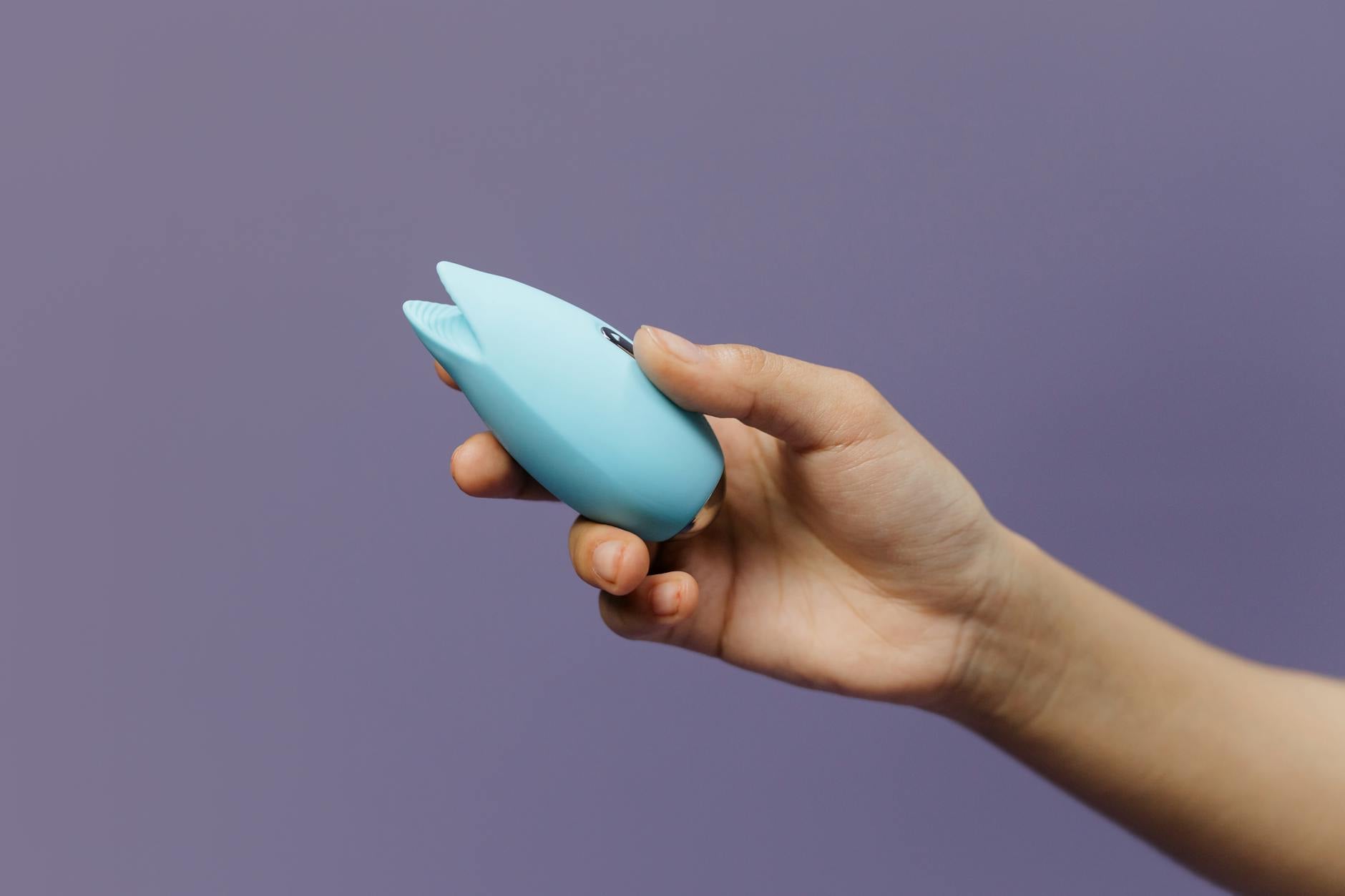
Let your partner hold the vibrator first. Not on you. Just hold it, feel how it works, get comfortable with the weight and the button. Familiarity kills a lot of that strangeness.
Then, use it with them present but not initiating. You're in control. They're watching, learning what makes sense. This keeps them from feeling responsible for operating a tool they don't understand yet.
The quieter the vibrator, the less it feels like a medical device. The Lem is specifically designed to be a clitoral suction toy, not a loud internal vibrator, which often makes partners more comfortable because the sensations feel more like partnered touch.
Talk while you're together. Not clinical talk. Just checking in. "This feels good here." "Can you touch me while I do this?" "That's nice." This keeps it conversational and connected rather than mechanical.
Your partner gets to participate in understanding what you like. They're not being replaced. They're learning your body at a deeper level. That's actually intimate.
This is the turning point where it stops being your tool and becomes shared. Some partners need time before they want to hold it. Some jump there immediately. Both are fine.
If your partner wants to try, guide them gently. Show them what speed, what angle, what rhythm. They're not intuitive. But the fact that your partner wants to learn is actually a sign the resistance is breaking down. They're no longer protecting their ego. They're curious about what makes you respond.
This is where a lemon vibrator's suction design helps. Because it's not thrusting or penetrative, it feels more like an extension of touch. Your partner can use it while also kissing you, touching you, being present. It doesn't feel like a replacement. It feels like exploration.
After the first time, don't make it a big deal. Use it sometimes, don't use it sometimes. The more ordinary you make it, the more your partner will stop seeing it as a threat and start seeing it as just another part of how you be together.
Some couples use clitoral vibrators only occasionally. Some use them regularly. There's no correct ratio. What matters is that you both feel comfortable with the choice.
If your partner's resistance returns at some point, don't panic. Long-term relationships have waves. Sometimes things that felt fine feel weird again. That just means you check in again without defensiveness.
Here's what I see happen with couples who move through this process well: the resistance dissolves because the partner realizes this isn't a threat. It's an expansion. Your partner went from seeing the Lem as something that proved they weren't enough to understanding it as something that lets their partner feel more sensation, more pleasure, more present.
That's a shift from scarcity to abundance. And once a partner makes that shift, they often become curious. They want to understand why certain sensations work. They start asking questions. They initiate using it together.
You stop feeling like you're asking for permission. Your partner stops feeling defensive. And sex becomes something you're both genuinely exploring instead of something that follows a predetermined script.
That kind of openness, that willingness to try something new together, often spills into the rest of the relationship. You become the kind of couple that talks about hard things. That's worth way more than the vibrator itself.
If your partner refuses entirely after you've had the conversation, that's information too. It might mean they're not ready. It might mean they have some anxiety you haven't addressed yet. It might mean they have strong beliefs about sex that feel non-negotiable to them.
Your pleasure still matters. If this is something you genuinely want to explore, that's valid. But it's also worth asking yourself whether this is a compatibility issue or just a timing one. Sometimes a partner needs months to process before they're ready. Sometimes they need a conversation with a therapist. Sometimes they genuinely aren't on board, and you have to decide what that means for you.
There's no universal right answer. But making the space for your partner to get there on their own timeline, without resentment or pressure, usually gets better results than pushing.
How do I bring up lemon vibrators without my partner thinking I'm unhappy with them?
Lead with curiosity instead of complaint. "I've been reading about clitoral vibrators and I'm interested in exploring new sensations with you" is fundamentally different from "I need something different." You're inviting them into an exploration, not announcing a problem with the current situation. Frame it as "both of us together," not "something I need." Also, timing matters. Do this conversation when you're calm and connected, not when you're frustrated.
What if my partner thinks lemon vibrators mean I don't want sex with them anymore?
That's the core fear, and it needs a direct answer. Say something like: "This isn't about wanting you less. This is about feeling more when we're together. The goal is us having better sex, not replacing you." Then show them that's true by still initiating partnered sex without the vibrator sometimes. Behavior backs up words more than anything you say.
Is it normal for my partner to feel awkward holding a lemon vibrator the first time?
Completely normal. It's unfamiliar, and there's cultural weirdness around it. Let them sit with the awkwardness. Don't try to fix it or make them comfortable too quickly. Awkwardness dissolves with exposure and time, not reassurance. The fact that they're willing to feel awkward is actually huge.
Should I hide my lemon vibrator if my partner isn't ready yet?
Not hide it in a sneaky way, but you also don't need to leave it out as a statement. Keep it somewhere accessible but private. If your partner finds it, that's a conversation. But you're not trying to hide the existence of the tool. You're respecting their timeline on engagement with it. That's different.
What if my partner wants to use a lemon vibrator but I'm shy about being that visible?
That's worth examining. Sometimes the shyness is about vulnerability, which is real. Sometimes it's about belief that you don't deserve this. Talk to your partner about what specifically makes you shy. Often, once you start and realize your partner is genuinely into it (not judging you), the shyness fades fast. Your partner wanting to give you pleasure is actually a compliment.
Can a lemon vibrator actually help couples who feel disconnected?
Not by itself. The vibrator is just the vehicle. What actually helps is the conversation, the willingness to try something new together, and the shift that happens when partners realize they can talk about sex openly. The Lem or any clitoral vibrator just creates a reason to have that conversation. But yes, couples who move through this process often report feeling more connected.
The hardest part of introducing lemon vibrators into a traditionally-minded relationship is the conversation before anything physical happens. That conversation is where most couples fail, because they try to skip it. Once you've had it, and once your partner understands they're not being replaced, resistance usually softens.
Your partner might not become enthusiastic overnight. That's fine. What matters is that you're exploring together instead of against each other. And often, once that shift happens, your partner becomes curious. They want to understand your pleasure. They start asking questions. They might even suggest trying something new themselves.
That's when you know it worked. Not when your partner loves the vibrator, but when you both feel like you're on the same team. If you're stuck on how to start the conversation or need more guidance on navigating this specific dynamic, we're here. Reach out to contact us and let's talk through what might work for your relationship.