Let's name what's happening
Vaginismus is involuntary muscle tension that makes vaginal entry painful or impossible. It's not in your head. It's not a sign you don't want sex. It's a protective reflex your pelvic floor learned for real or imagined reasons, and your body is doing exactly what it was programmed to do. Which is both the problem and the solution.
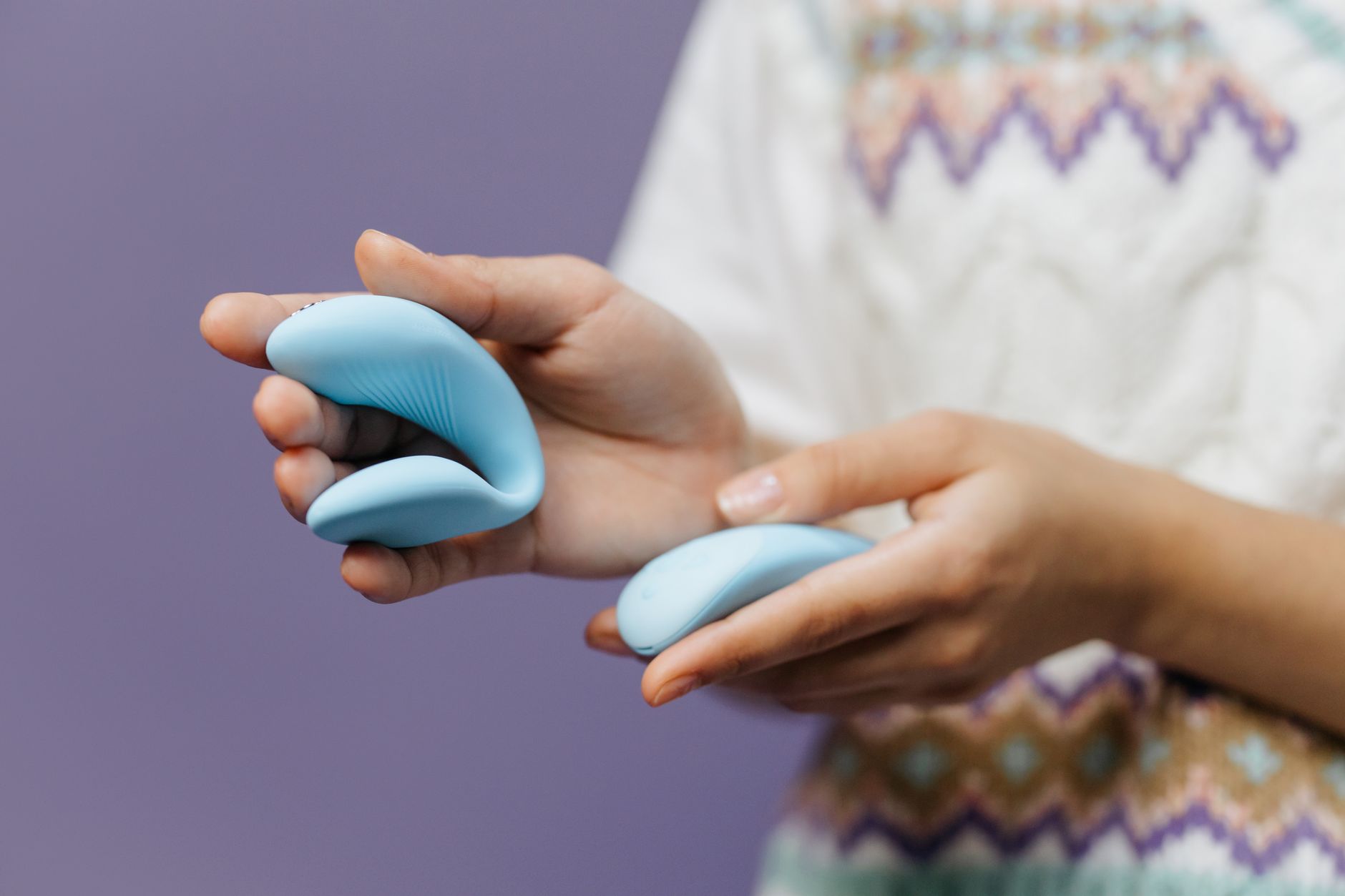
If you're living with vaginismus or chronic pelvic floor tension, penetration-focused sex has probably become something you dread or avoid. And that makes total sense. But it also means pleasure has gotten boxed into one category. Clitoral vibrators like the Lem exist partly because that box is way too small.
How vaginismus shuts down pleasure
When your pelvic floor is in a protective clench, three things happen simultaneously. First, the muscles around the vaginal opening physically tense, making entry painful or impossible. Second, the tension spreads upstream to your lower belly, hips, and sometimes your thighs. Third, and this is the part nobody talks about enough, your nervous system goes into a subtle fight-or-flight state. You're hyper-alert, which makes arousal harder to access and easier to lose.
This creates a feedback loop. You anticipate pain. Your body tenses. Pain appears. Your nervous system learns that sex equals threat. Next time, the tension starts earlier and runs deeper.
But here's the thing. Clitoral pleasure does not require a relaxed pelvic floor in the same way vaginal penetration does. Clitoral stimulation activates a different neural pathway. It actually helps retrain your nervous system to associate touch with safety instead of danger.
Why clitoral vibrators work differently
Let me break this down physiologically. Vaginismus is a localized protective response centered around the vaginal opening and surrounding muscles. The clitoris is outside that protective zone. When you stimulate the clitoris, you're sending a signal to your brain that says "this is safe." You're not asking your pelvic floor to relax. You're bypassing the problem entirely and rebuilding trust.
Clitoral vibrators, especially air-suction designs like the Lem, also offer something psychological that matters. You have complete control over intensity and sensation. You're not waiting for a partner to intuit what feels good. You're not managing anyone else's pleasure or expectations. That autonomy is therapeutic on its own.
Additionally, vibration itself has a mild desensitizing effect. It interrupts the pain signal loop. If you've been anticipating pain during any genital touch, consistent stimulation from a lemon vibrator can help your nervous system recalibrate. The sensation becomes familiar. Your body learns that this specific touch does not equal threat.
Starting with vibration when penetration is off the table
If you're new to using vibrators or if pelvic tension has made all genital touch feel dangerous, here's the protocol I recommend.
First, choose a time when you're genuinely alone and unhurried. Vaginismus flares under time pressure. You need what I call "nervous system permission." Give yourself 20 to 30 minutes with zero obligations after.
Start clothed. Yes, really. Hold the Lem over your underwear. Run it across your inner thighs, your lower belly, the skin near your hip bones. You're teaching your body that vibration is safe before you go anywhere near genitals. Spend five to ten minutes here. Notice what happens to your breathing. Your body should start to relax slightly.
Then, move to the outer labia while still clothed if that feels better. You can use the Lem here for several sessions before moving closer. There's no timeline. Vaginismus often develops over months or years. It will retrain over weeks or months, not days.
Once you're comfortable with the Lem on the outer labia, move skin-to-skin. If that triggers tension, pause. Go back to clothed or to the thighs. Arousal doesn't need to be linear or fast. Your nervous system is learning that sensation equals safety. That learning is happening even if you don't feel "turned on."
Pairing vibration with breathing and grounding
One of the most effective tools I share with clients who have vaginismus is pairing genital stimulation with body awareness. The reason is this. Pelvic tension usually exists alongside a slightly dissociated state. You're checked out from your body because being in your body meant pain or danger.
When you use a lemon clitoral vibrator, narrate what you're feeling out loud or in your head. Not erotically. Clinically. "The Lem is touching the top left of my clitoris. I notice a slight tingle. My thighs want to clench but I'm inviting them to soften. My breath is shallow. I'm going to slow down and breathe fully." This is called somatic tracking, and it basically rewires the disconnect.
Breathing matters enormously. Most people with vaginismus hold their breath or breathe shallowly during any genital touch. Your pelvic floor mirrors your breathing. If your breathing is tense and shallow, your pelvic floor stays braced. If you breathe slowly and deeply, your pelvic floor softens.
Try this. Before you use the Lem, spend two minutes on box breathing. Inhale for four counts. Hold for four. Exhale for four. Hold for four. Repeat. Your nervous system will shift measurably. Then use the vibrator while maintaining that breath. You'll notice your body responds differently.
When to bring a partner in (and how)
If you have a partner, the question of whether to involve them in using clitoral vibrators is yours to answer. Some people with vaginismus prefer solo exploration first. Some want their partner involved from the start because it reframes sex as collaborative rather than performative.
If you do involve a partner, explicit communication is non-negotiable. This is not the time for hints or hopes. Tell them: "I'm using the Lem to help my nervous system learn that touch is safe. This is not a performance. There's no end goal. If I say stop, we stop immediately, no questions." Then actually stop if you ask to.
Your partner can be present and not directly involved. They can hold your hand. They can sit nearby. They can help with breathing cues. The job of a partner with vaginismus is to remove pressure, not add it.
The pelvic floor physical therapy piece
Here's something crucial that vibrators alone cannot fix. If you have vaginismus, working with a pelvic floor physical therapist is genuinely important. Not eventually. Now. A pelvic floor PT can assess whether your tension is high-tone (too tense, like vaginismus usually is) or low-tone, and that completely changes the approach.
They can also teach you how to release pelvic tension consciously, which vibrators help with but don't fully replace. Some people with vaginismus also have pelvic floor weakness underneath the tension, and vibrators won't address that. The Lem is a tool inside a bigger toolkit. It's not a substitute for professional help.
If cost or access is a barrier, many cities have sliding-scale pelvic floor PT clinics. Some pelvic floor PTs work virtually. Look for someone who specializes specifically in vaginismus or vulvodynia, not general pelvic pain.
Managing emotional blocks while using vibrators
Here's the part that catches people off guard. As you use clitoral vibrators like the Lem and your nervous system starts to relax, sometimes emotional stuff surfaces. You might feel grief about the time you've lost to pain. You might feel anger about why vaginismus developed. You might feel vulnerable in a way that's uncomfortable.
That's normal, and it's part of the healing. You're not broken. You're integrating a part of yourself that's been shut off. That integration isn't always comfortable.
If those emotions get intense, that's a good moment to involve a therapist alongside the pelvic floor PT. Vaginismus often has roots in trauma, anxiety, or shame. A vibrator cannot heal those roots. But a vibrator plus professional support can create real change.
Practical tips for consistent use
Consistency matters more than intensity when you're retraining a protective reflex. Using the Lem three times a week for ten minutes will create more change than using it once weekly for an hour. Your nervous system needs repeated evidence that this touch equals safety.
Keep it simple. You don't need fancy routines or extended sessions. Five to fifteen minutes of direct clitoral stimulation is plenty. If you find yourself forcing it or resisting, you've gone too far. Pleasure should feel easy, even if it doesn't feel intense.
Store your Lem somewhere you see it regularly. Visibility increases follow-through. Some people keep theirs on the nightstand. Some keep it in a small pouch in their underwear drawer. The goal is low friction in getting started.
If you're using the Lem with a partner after some solo work, you might find that the transition feels surprising. Solo pleasure is about you. Partner sex involves coordination and presence. That's a different nervous system state. Be patient with that transition.
People also ask
Can you use a clitoral vibrator if you have vaginismus?
Absolutely. In fact, clitoral vibrators are often more comfortable than partnered touch or penetration because they bypass the muscle tension that defines vaginismus. The clitoris is outside the protective zone where vaginismus lives. You're not asking your pelvic floor to cooperate. You're teaching your nervous system safety through a different pathway.
How long does it take to see changes with vibrators and vaginismus?
Most people notice a shift in comfort or arousal within two to three weeks of consistent use. That said, true retraining of a protective reflex takes longer. Some people see significant improvement in six to eight weeks. Some take three to six months. The timeline depends on how long vaginismus has been present, whether there's underlying trauma, and whether you're working with a pelvic floor PT simultaneously. Progress isn't linear. You might have good weeks and harder weeks.
Should I use lube with a clitoral vibrator if I have vaginismus?
Not necessarily for clitoral stimulation alone. The clitoris doesn't need lubrication the way vaginal tissue does. That said, if you're using a vibrator on the vulva more broadly or if you're eventually exploring internal stimulation, water-based lube makes everything more comfortable. Lube also signals to your nervous system that you're being gentle with yourself, which can help with relaxation. Use it if it feels good. Skip it if it doesn't.
Is using a lemon clitoral vibrator alone a treatment for vaginismus?
It's a helpful tool, not a complete treatment. Vaginismus benefits from a combination approach: pelvic floor physical therapy, often therapy or counseling, partner communication if applicable, and yes, tools like vibrators. The vibrator helps retrain your nervous system and rebuild pleasure. The pelvic floor PT gives you physical strategies. The counseling or therapy addresses any underlying emotional or relational patterns. All three together create lasting change.
Can using a vibrator make vaginismus worse?
If you're pushing too hard or forcing intensity before your nervous system is ready, yes. That's why starting slowly and staying within your comfort zone matters. If vibration triggers tension or pain, pause. Go back to earlier steps. You're not failing. You're listening to what your body needs. The goal is gentle, consistent progress, not speed.
What if my partner is hesitant about clitoral vibrators?
That's a conversation worth having directly. Some partners worry that a vibrator means they're not enough. That's about their insecurity, not your need. You might frame it this way: "This isn't about you. It's about me learning what feels safe and good in my body. Once I know that, I can bring that knowledge into our sex together." Some partners feel relieved to have a tool that reduces pressure on them to perform penetration. You won't know until you talk.
Moving forward
Vaginismus is a real, diagnosable condition. It's not something you caused. It's something your body learned to protect you. The fact that you're exploring tools like the Lem means you're already in the process of teaching your body something new: that pleasure is possible, that safety exists, and that your nervous system can learn to relax. That's the whole game. Be patient with yourself. Your body will follow.