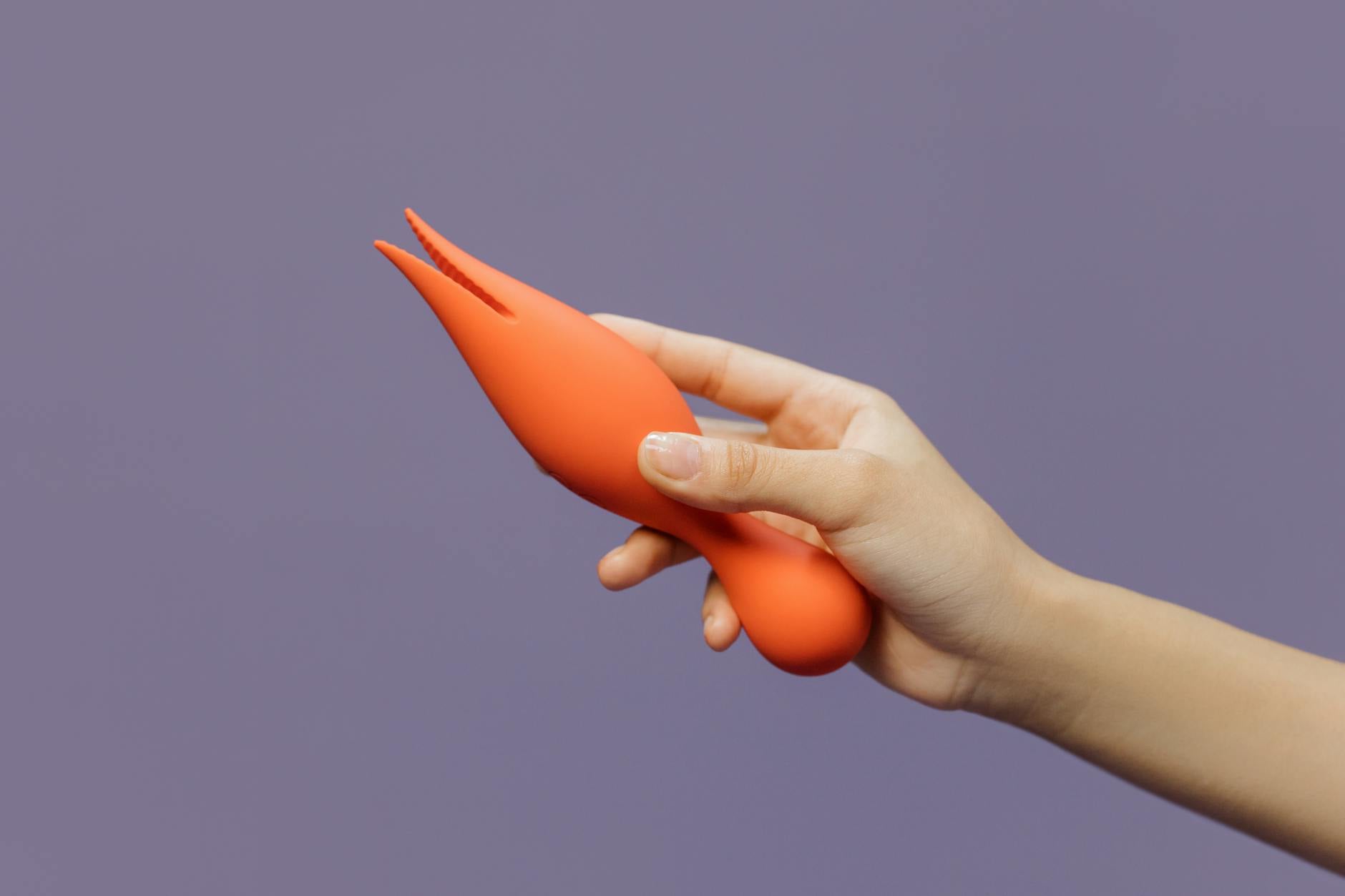
When your relationship shifts, desire often goes quiet
Let's be real. A major relationship transition. A recommitment after distance. A renewed spark after years of flatness. Your body knows something shifted even if your mind is still catching up. And sometimes that manifests as a kind of flatness in pleasure. Not numbness exactly. Just. Quiet.
Using a lemon clitoral vibrator during this season isn't about forcing anything back to life. It's about meeting your body where it actually is and letting sensation guide you home.
The neuroscience of desire after transition
When relationships change, your nervous system recalibrates. If you've been in disconnection, your body learned to protect itself by dampening arousal signals. That's not a personal failure. That's a survival mechanism doing exactly what it's designed to do.
The good news: desire doesn't disappear. It goes dormant. And the brain's capacity for pleasure, for orgasm, for deep sensation is still absolutely there. Using lemon sexual toys like the suction-based vibrators from My Lemon Suction can actually help your nervous system remember that it's safe to feel again.
Clitoral vibrators work through nerve stimulation, not friction alone. This matters after relationship transitions because suction-based stimulation creates a different neural pathway than traditional vibration. Your body experiences it as novel. That novelty can bypass some of the protective patterns your nervous system has learned.
Why lemon vibrators are particularly useful here
Three reasons lemon adult toys work well for reconnection:
Precision without pressure. Suction stimulation targets the thousands of nerve endings in your clitoris without requiring direct contact. If you've been numb or protective, this gentleness matters. You're not forcing sensation. You're inviting it.
Pacing you can control. A lemon lem vibrator has variable intensity levels. You start at pattern one. You stay there as long as you need. You don't move up until your body says yes. That agency, that ability to set the pace, is crucial when you're rebuilding trust in your own pleasure.
A new association. If pleasure has felt tied to connection that broke or changed, a toy becomes a neutral space to explore sensation for its own sake. You're not comparing. You're not performing. You're just. Feeling.
Starting again: the first solo session
Before anything partnered, solo exploration is non-negotiable. Here's why and how.
Start in a space where you feel genuinely safe and won't be interrupted. Not just physically safe. Emotionally safe. Somewhere your nervous system knows it can relax.
Give yourself twenty to thirty minutes. Not five. Not rushed. Transition time matters. Your brain needs to shift from your day into curiosity. Use that time to touch your body in ways that feel good but are not sexual. Your forearms. Your neck. Your inner thighs. The goal is to send your nervous system a signal: this is a pleasure space now.
When you introduce the lemon vibrator, start at the lowest setting. Let it warm your clitoris up. You might feel almost nothing at first. That's okay. Sensation can take a while to wake up. Stay with it for five to ten minutes. Don't rush to orgasm. If it comes, great. If it doesn't, that's information too.
Most people report that after two or three sessions, sensation starts returning. The nerve endings are remembering. Your body is getting the signal that pleasure is available again.
The second conversation: bringing it back to your relationship
If you're in a partnership and you want to include them, that's a separate conversation entirely.
Honestly though, the most important thing you can do is tell them what you learned in solo exploration. "My body is coming back online. It's quiet still, but it's awake." Not "I want to use a toy with you now." The first conversation is about information. The second is about desire.
If your partner is curious, you can explore together. Have them watch. Have them hold the toy. Have them use it on you while you're kissing them or they're inside you. Or keep your solo practice completely separate. Both are entirely valid.
The key thing: using lemon clitoral vibrators in a relationship context only works if the conversation is about pleasure, not performance. If either of you feels like you're trying to fix something, the toy becomes a pressure tool instead of a pleasure tool.
Managing expectations without killing curiosity
Here's what I tell my clients in this exact situation.
Your first orgasm after a relationship transition might feel different than you remember. Smaller. Quieter. More concentrated. Or wildly intense. The variation is normal. Your nervous system is recalibrating. You're not broken. You're adapting.
Give yourself at least four to six weeks of consistent solo exploration before you worry that something is wrong. "Consistent" means two or three times a week, not daily. Your clitoris, like any other part of your body, needs recovery time.
If after six weeks sensation still feels completely absent, that's worth exploring with a therapist or a healthcare provider. Sometimes what feels like lost desire is actually anxiety, grief, or a nervous system that needs more support than a toy alone can provide.
The practical stuff: care and lube
A lemon vibrator works best when properly cared for and when you're using the right lubricant.
Water-based lube only. Silicone lube can degrade silicone toys. Apply generously. The suction mechanism needs that glide to work. Warm lube before use if you can. Temperature matters more than you'd think when your body is still in reconnection mode.
Clean your toy immediately after use with warm water and mild soap. Dry it completely. Store it somewhere dry and private. A toy that's well-cared-for lasts years and also signals to your body that this practice matters. You're not hiding it. You're honoring it.
When to adjust your approach
If after two weeks you feel pain, stop. Pain is data. It means either the toy isn't right for your body, you need more lube, or your nervous system needs different support. That's worth discussing with a gynecologist.
If you feel frustrated that sensation isn't returning fast enough, that's worth sitting with. Reconnection has a timeline that your body sets, not your mind. Impatience is often a sign that you're trying to force something instead of inviting it.
If using a lemon suction vibrator brings up grief or sadness, that's also normal. Pleasure and emotion are deeply connected. You might be grieving the relationship that changed or the version of yourself who experienced desire differently before. That's real work. That's worth feeling.
FAQ: Questions I hear all the time
Can using a vibrator actually help you reconnect with desire after a relationship transition?
Yes, but not by itself. A toy is a tool for nervous system recalibration, not a replacement for emotional processing. If you're using a lemon clitoral vibrator to avoid dealing with grief or broken trust, the toy won't help. But if you're using it as part of intentional reconnection with your own body after a difficult season, it genuinely can help your nervous system remember that pleasure is available.
How long does it usually take to feel sensation again?
That varies wildly. Some people feel something shift in one or two sessions. Others take four to six weeks. Your timeline depends on how long you were disconnected, what caused the disconnection, and what's happening in the rest of your life right now. Stress, grief, and hormonal changes all slow down sensation return. That's not abnormal.
Is it normal for orgasms to feel different after a relationship transition?
Completely normal. Your whole nervous system has recalibrated. Your orgasms might feel smaller, more localized, or completely different in character than they did before. That doesn't mean something is wrong. It means your body is adjusting. Give it time.
Should I hide that I'm using a vibrator from my partner?
That depends on your relationship. If you're in a partnership where you can talk about pleasure, you don't need to hide it. If you need privacy to explore on your own first, that's valid too. But if you're hiding it from shame or fear, that's worth examining. Your pleasure matters.
Can lemon sexual toys help with desire that's tied to anxiety about the relationship happening again?
Partially. A toy can help you reclaim sensation and agency in your own body. But if your anxiety is about whether the relationship will work out, or whether you can trust your partner, that's a conversation bigger than what a vibrator can hold. How to Use Lemon Vibrators for Better Communication During Solo Play and Partnered Sex might help you think through how to talk about this with a partner. But the underlying anxiety work might need a therapist too.
What if I don't feel anything at all with a lemon vibrator?
First, give it at least three to four sessions. Sensation can be slow to wake up. Second, make sure you're using enough lube and starting at the lowest intensity. Third, try different times of day. Morning, evening, mid-cycle if you menstruate. Your body responds differently depending on context. If after six sessions with genuinely relaxed expectations you still feel nothing, How to Find the Right Lemon Vibrator When You Have Sensitive Skin might help you troubleshoot whether it's a tool fit issue or something else entirely.
The permission you actually need
Here's what matters most: you don't need your pleasure to come back on any particular timeline. You don't need it to feel the way it used to. You don't need an orgasm to validate that reconnection is working.
What you need is to practice believing that your pleasure matters. That your body deserves attention after a difficult season. That using a lemon vibrator or any other tool is an act of self-respect, not self-indulgence.
Desire after relationship transition isn't about getting back to normal. It's about meeting yourself where you actually are and letting sensation guide you toward what comes next. A tool like My Lemon Suction's clitoral vibrators can help with that. But the real work is showing up for yourself with patience and without shame.
Your pleasure has always been there. It's just been quiet. And quiet things, given time and attention, often wake up into something richer than before.