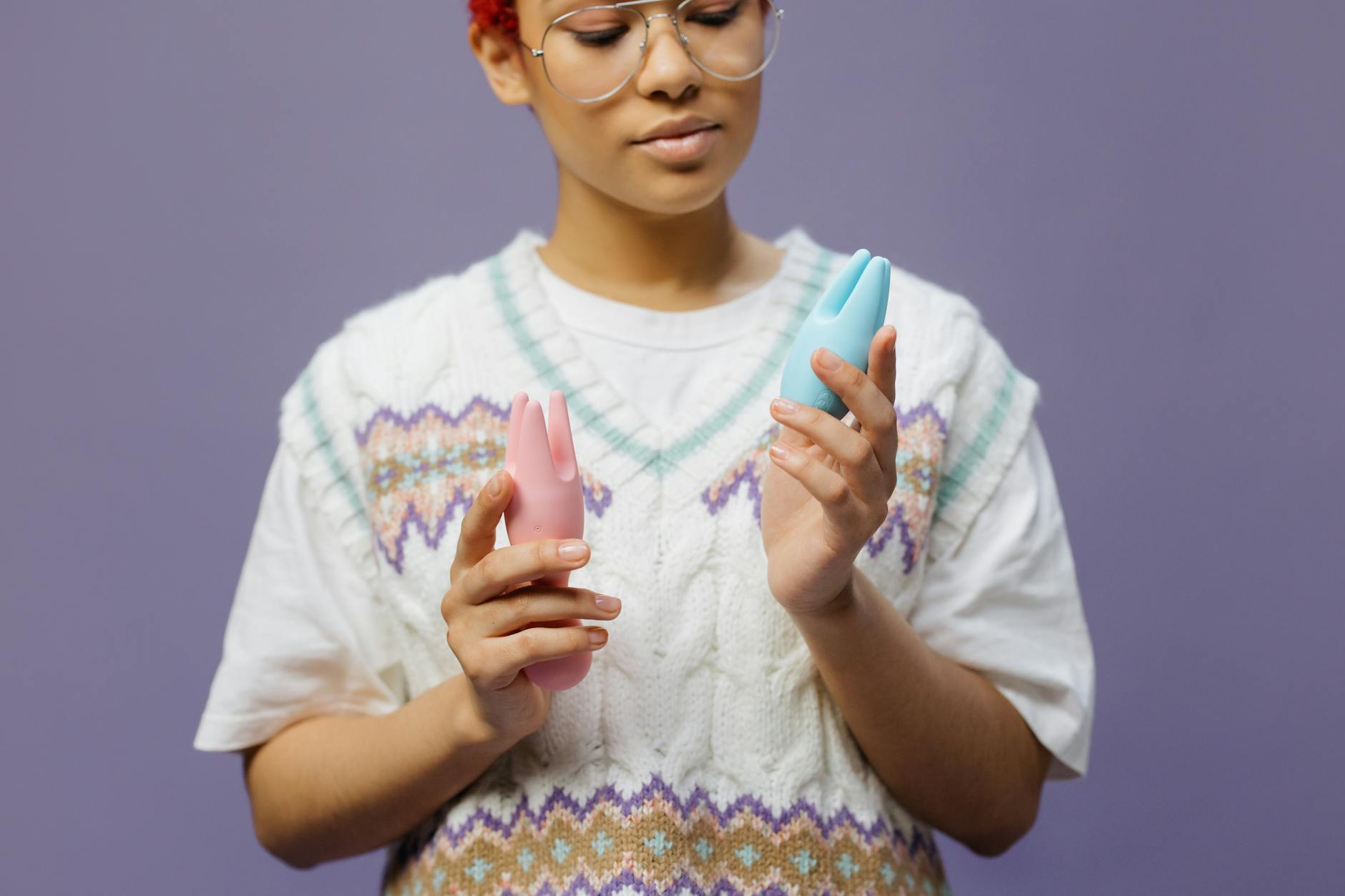
Let's be real about midlife bodies
Your partner isn't the same person they were at 30. Neither are you. But somewhere between "we've both aged" and "this doesn't work anymore" lives a whole conversation nobody wants to have. Physical changes in midlife are real. They're also completely workable, especially when you have the right tools and the willingness to adjust.
Here's what actually changes physiologically, what myths get in the way, and why a lemon vibrator might be exactly what your partnership needs right now.
What actually shifts with age
Erections take longer to arrive and harder to maintain. Arousal builds more gradually. Recovery time extends. Vaginal tissue thins and lubrication decreases. Orgasms can feel softer, take longer, or arrive less predictably. The pelvic floor weakens without intentional work. Sensation sometimes shifts, becomes less responsive to direct touch but sometimes more sensitive to sustained stimulation.
None of this is new information. But here's what gets missed: physical changes don't erase capacity. They redirect it.
A partner who's struggled with lasting power in their 30s might find that slower arousal gives them more control. Someone with a thinned vaginal wall has different needs but often discovers orgasms feel distinctly different, sometimes more localized, sometimes more full-body. These aren't losses. They're shifts.
Why lemon vibrators work for aging bodies
There are three specific reasons why a lemon clitoral vibrator is genuinely useful when your partner's body has changed.
First: they remove pressure. Literally. A lemon vibrator works through suction and pulsing, not friction or intense vibration. For a partner whose tissue is more delicate or whose nerves respond differently, this feels gentler. No grinding, no sustained pressure on areas that have become sensitive. The suction mode on something like a lemon vibrator distributes stimulation more evenly.
Second: they supplement without replacing. A lemon sexual toy isn't a substitute for partner touch. It's an addition. Someone whose arousal takes longer now can use a vibrator during foreplay while you're doing other things. It's not a workaround. It's collaboration.
Third: they level the playing field. If your partner has slowed down, a lemon adult toy means you're not waiting for them to catch up to your arousal. You're both moving at your own pace, using tools that work for your body. That's radically less stressful than performing desire on someone else's timeline.
The conversation that has to happen first
Honestly, this is where most couples get stuck. Suggesting a vibrator to a midlife partner can feel like criticism. "Are you not enough?" is the subtext they'll hear, even if you phrase it differently.
Here's the reframe: "I want to feel good together, and I've noticed things have shifted. I want us both to have what we need."
Not: "We need to use this because you can't." That lands like failure.
Yes: "I found something that might help us both feel better. Can we try it together?"
The difference is offering a solution to a shared problem, not diagnosing a problem with them. Your partner's body changed. Your body probably changed too. A lemon vibrator isn't fixing them. It's honoring what works now.
Bring it up outside the bedroom. Show them the product. Explain that it's designed for comfort, not intensity. If they're nervous about sensations, start with the lowest setting. If they're worried about noise, demo it. Make this collaborative, not surprising.
How to actually use one together
Four practical steps:
Start with foreplay that already works. Don't jump straight to the vibrator. Kiss, touch, get both of you warm and interested. A lemon vibrator is most effective when you're already a little turned on. Arousal makes nerves more responsive.
Introduce it when things are building. As arousal deepens, bring the vibrator in. Use it externally first if this is new. Start at the lowest pattern (most lemon vibrators have 3-7 settings). Let your partner control the pace and intensity, or take turns.
Use it on both of you. If your partner is hesitant, use it on yourself first while they watch. Let them see that it's not mechanical or weird. It's just another way bodies feel good. If they're curious, let them hold it and explore how it feels.
Don't make it the main event. A lemon clitoral vibrator is best when it's part of a larger experience, not the whole thing. That takes the pressure off both of you. You're not relying on it to make everything work. You're using it because it helps.
When pressure or sensation shifts
If your partner's tissue is more delicate now, or if they experience pain, this is worth addressing directly. Don't power through. A good water-based lubricant is essential. Silicone-based lubes feel thicker but can damage silicone toys, so stick with water-based. Apply it generously. This isn't a sign of dysfunction. This is basic comfort.
If arousal takes much longer than it used to, that's normal. Budget time. Don't rush. A lemon vibrator actually helps here because it can work while you do other things. While a partner is slowly building arousal, you can be receiving stimulation. That's equity.
If sensation feels numb or distant, this often resolves with consistency. Using a vibrator regularly (not obsessively, but a few times a week) can actually restore sensitivity over weeks or months. The nerves wake back up.
What changes in pleasure itself
Here's something nobody talks about: sometimes midlife sex is better. Seriously.
Your partner might have less performance anxiety because they care less what they look like or how long things take. You might be more confident about what you want. You probably fight less about stupid things and communicate more directly. That psychological shift changes everything.
Orgasms sometimes feel different because the whole body is more present. There's less cognitive load about how you look or whether you're doing it right. Your partner might discover they have different kinds of orgasms now. Some people find that intensity softens but sensation deepens. Others find they can have multiple orgasms in ways they couldn't before.
Using lemon sexual toys together can actually deepen this. Because you're not performing, you're just exploring what works now. That's genuinely intimate.
When to get professional help
If pain is consistent, see a doctor. Genitourinary syndrome or other tissue changes are treatable. If erectile function has changed dramatically and it's distressing, a conversation with a physician is worth it. If desire has completely flatlined and nothing is shifting it, a therapist who specializes in couples can help untangle whether this is physical, relational, or both.
A lemon vibrator is useful. It's not a fix for everything. But for the straightforward physical changes that come with aging, it's genuinely helpful.
What partners actually report
Couples who've navigated this tell me similar things. The first time felt awkward. By the third time, it was normal. By the tenth time, they couldn't imagine not using it. The shift isn't about the vibrator. It's about deciding together that pleasure still matters, that bodies change, and that you're both worth the effort.
One partner told me: "I thought it meant I was failing. Turns out it meant we both wanted to feel good." Another said: "It gave us permission to talk about what had actually changed, instead of just pretending everything was fine."
That's the real work. The lemon vibrator is just the excuse to have the conversation.
FAQ
Is using a vibrator with my partner a sign our sex life is failing?
No. It's a sign you're willing to adapt. Physical changes are inevitable. Most couples either adjust and thrive, or they pretend everything is fine and drift. Using a lemon adult toy is in the "adjust and thrive" category.
Will my partner feel replaced or threatened by a vibrator?
Possibly, if you introduce it wrong. But if you frame it as something you're doing together, for both of you, most partners get curious instead of threatened. Make it collaborative. Let them hold it. Use it on yourself first. Show them it's not about replacing them.
How do I bring this up without hurting their feelings?
Outside the bedroom, with honesty and zero judgment. "I've noticed things feel different for both of us. I want us to both feel good. I found something that might help." Focus on the shared experience, not on fixing them. If they're defensive, step back. Give them time to sit with the idea.
Will a vibrator work if my partner's sensation has decreased with age?
Often yes, especially if you start gently and use it consistently. Sensation can improve with regular use as the nerves "wake up." But start at the lowest setting. Let arousal build first. Use lots of lubricant. And talk about what feels good, not what doesn't.
Can we use a lemon vibrator if my partner has physical limitations or chronic pain?
Maybe, with caution. If your partner has pain, a vibrator that works through gentle suction might feel better than one with intense vibration. But talk to their doctor first about what's safe. Some conditions require specific approaches. Don't guess.
What if we try it and it doesn't help?
Then you move on. A lemon vibrator won't fix everything. But it's low-risk to try. If it doesn't work, that's data. The real work is the conversation about what you both need now. The vibrator is just one tool.
Your partner's body has changed. So has yours. That's not failure. That's life. The couples who thrive aren't the ones whose bodies stayed the same. They're the ones who decided that pleasure still matters, and that they were both worth the effort to figure out what works now.
If you want to start a conversation about this with your partner, or if you need more specific advice on how to approach it, we're here. Get in touch anytime.