
The thing nobody tells you about reuniting
Long distance doesn't just test your emotional connection. It resets your physical one. Your bodies have spent months (sometimes years) without touch, without rhythm, without the ease that comes from knowing someone's patterns. When you finally reunite, there's this weird gap between the emotional reunion and the physical one. One feels automatic. The other feels like learning each other again.
Introducing a lemon clitoral vibrator into that space isn't about adding spice to a dead bedroom. It's about shortcutting the awkward phase and getting back to real pleasure, faster.
Why long distance messes with physical intimacy
It's not just the absence of touch. It's the absence of rhythm.
When you're together regularly, your bodies sync. There's a cadence to how you touch each other, how quickly arousal builds, what works. Long distance flattens that. Phone sex (if you're doing it) is intentional and often performance-y. In-person sex, when you finally reconnect, can feel weirdly formal because you're both anxious about messing it up.
Your nervous systems are also out of sync. After months of minimal physical contact, sensations that used to feel normal can feel too intense. Other sensations that used to work don't land the same way. It's not a problem. It's just biology. And it's temporary.
Here's what happens: introducing a lemon vibrator gives you both permission to stop performing and start exploring what actually feels good right now, in this body, in this moment. It's not a workaround. It's a reset button.
The conversation before you bring it up
Don't ambush a vibrator during sex. That's how it becomes "she didn't think I was enough." Or "he's trying to make me faster." Or "something's wrong with me."
Start the conversation outside the bedroom. Outside sex. Maybe over coffee, maybe in the car.
Try this: "I've been thinking about our reconnection. I want us to feel good together, and I know it might take time to get back into rhythm. I was thinking about trying something together that might help us both relax into it. Nothing crazy, just something I think could make it easier for us to find what feels good right now."
Then show them what you're talking about. If your partner is the type who responds to research, send them an article about clitoral vibrators. If they're more tactile, let them hold it, feel the weight, see that it's not threatening.
The goal of this conversation isn't permission. It's partnership. You're saying: I want us to feel good. I want to try something together. This is how.
If they're nervous, ask why. Is it because they think it means something about them? Because they're unsure how it works? Because they're worried it'll hurt? Each answer gets a different response, and none of them end with "okay, forget it then."
How to actually integrate it
First time, don't make it the whole event. That's too much pressure.
Start with foreplay. Touch each other the way you used to. Rebuild some of that physical ease. Once you're both aroused (and this might take longer than you remember, which is fine), introduce the vibrator as part of what's already happening, not a replacement.
If you're the one with the vulva, you might say: "Can you keep doing what you're doing, but let me try this too?" That keeps the focus on both of you. Your partner is still involved. You're just adding a tool.
For a lemon clitoral vibrator specifically: start on a lower setting. Long distance means your sensitivity might be different than before. What used to feel moderate might feel intense. Work your way up. There's no rush.
If your partner's inside you when you introduce the vibrator, that sensation is going to feel very different for both of you. A lemon vibrator adds pressure and rhythm to the area around the clitoris. Your partner will feel the vibration transmitted through your body. It's not uncomfortable, but it's unexpected. Name it: "You feel that? That's new." Normalize it. Make it collaborative.
The emotional part (which is actually bigger than the physical part)
Long distance creates distance in more ways than miles. You've both had time alone with your own thoughts, your own bodies, your own fears about whether this still works.
Introducing physical pleasure together is a statement: I'm choosing you. I'm choosing us. And I'm choosing to do this with you, not alone.
That matters more than the vibrator itself.
Some people come back from long distance ready to jump in. Others need time to feel safe in their bodies again. If your partner needs that time, take it. A lemon clitoral vibrator isn't a solution to emotional distance. It's a tool for physical reconnection once you've started bridging the emotional gap.
Watch for pressure. On yourself. On your partner. If sex feels obligatory, if there's resentment underneath the foreplay, the vibrator won't fix that. A conversation with a therapist might.
Troubleshooting the first few times
Maybe it doesn't feel good the first time. That's common. Your body might be tense from anticipation. The angle might be off. The setting might be too high.
Try it again. Alone first, if that helps. Remember what you liked about it. Then invite your partner back in.
Maybe your partner feels excluded. That's real too. Help them understand that a vibrator creates sensation your body alone can't replicate. Their hands still matter. Their presence still matters. This is an addition, not a replacement.
Maybe you both feel awkward. Good. Awkward is the price of getting past awkward. Laugh about it. Make jokes. The couples who can laugh during sex tend to have better sex overall. Same energy here.
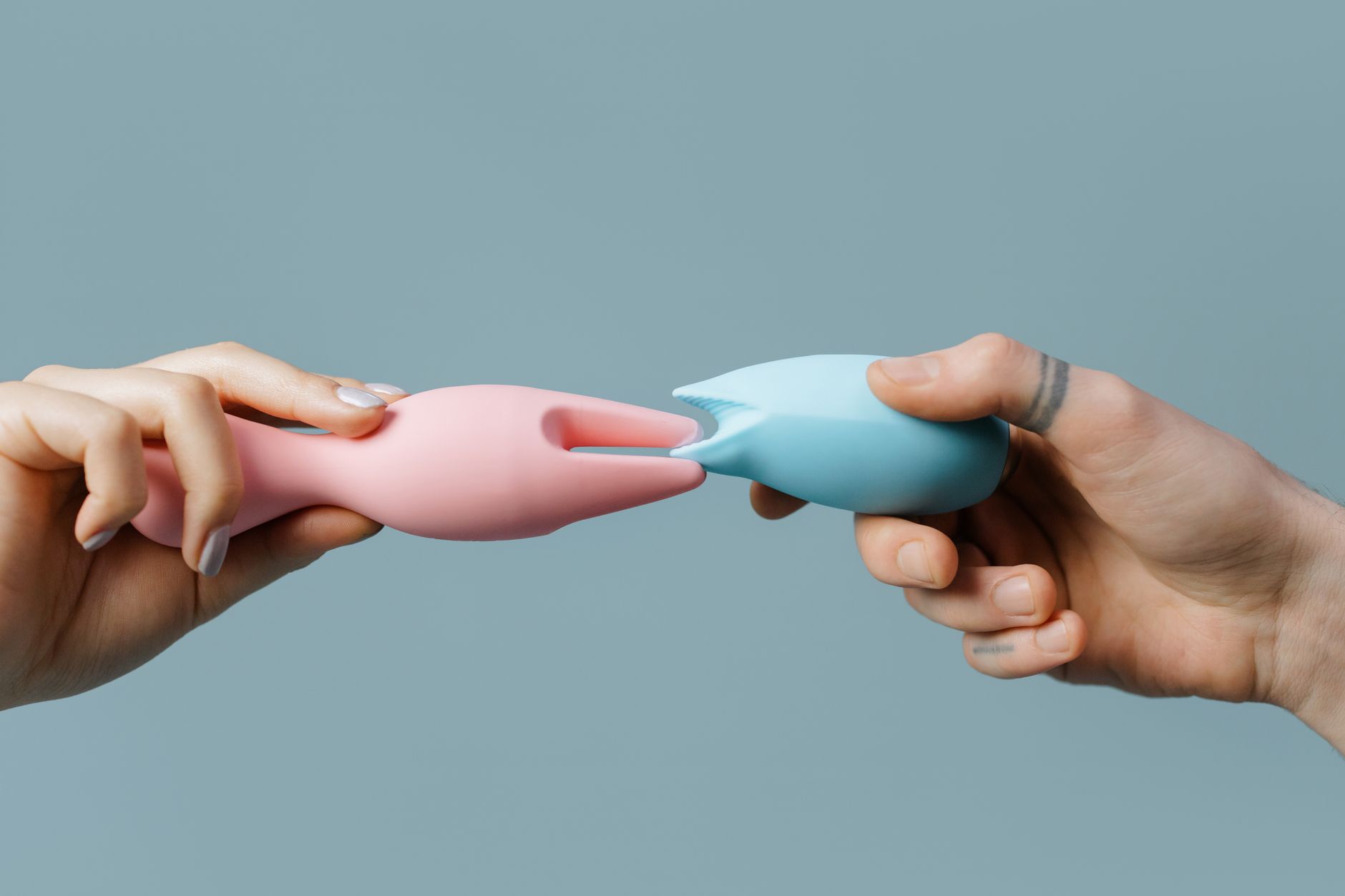
Photo by cottonbro studio on Pexels
How many times before it feels normal
Most couples report that it takes three to five times before a lemon clitoral vibrator stops feeling like a novelty and starts feeling like part of their normal rhythm.
That's not because anything's wrong with you. It's because your nervous system needs repetition to file something as safe. Introduce it. Use it. Let it become a thing you do. Don't make each session do the work of "finally connecting again." That's too much weight to put on one experience.
Separate the two projects: rebuilding emotional intimacy (which happens through conversation, presence, patience) and rebuilding physical rhythm (which happens through touch, exploration, time).
They're related. But they're not the same.
The longer-term play
Once you're both comfortable with a lemon vibrator, it becomes a tool you can reach for any time things feel stale or disconnected. Not because something's broken, but because you're both committed to pleasure.
That's the shift. From "we have to fix this" to "we get to explore this."
Long distance is hard on relationships, but it's not a permanent relationship reset. You get to choose what you keep and what you leave behind. If a clitoral vibrator is part of rebuilding something better, then bring it in. If it's not, don't. The goal isn't to use a specific toy. It's to feel good together again.
And that's always worth the conversation.
People also ask
Will a lemon vibrator feel weird for my partner?
Maybe at first. Your partner might feel the vibration transmitted through your body, or they might notice a difference in sensation and rhythm. That's new, not bad. Most partners adjust within the first two or three times. Some actually prefer it because it often means longer, more intense pleasure for their partner. Talk about what they're feeling during and after.
How do I know if my partner is secretly uncomfortable with vibrators?
Watch for consistent avoidance ("maybe later"), performance anxiety (sudden difficulty staying present or aroused), or resentment in other parts of your relationship. Those are signs you need a conversation outside the bedroom first. Don't keep pushing the vibrator if your partner's underlying concern is "this means something about me or us." Address that first. The vibrator can come later.
Can I use a lemon vibrator while my partner is inside me?
Yes, and many couples love it. A lemon clitoral vibrator adds sensation to the external area, so it won't interfere physically. Your partner will feel the vibration. Some find it intensifies their sensation too. Start on a lower setting so you're both adjusting to the new feeling at the same time.
What if we can't find a comfortable angle or rhythm together?
That's when experimentation becomes its own foreplay. Try different positions. Try your partner holding the vibrator instead of you. Try it during different parts of sex. What works on your wedding night might not be what works after a year together. That's fine. You're learning each other's bodies again.
Is it normal to need longer to orgasm after long distance?
Completely normal. Your nervous system, your hormones, your pelvic floor tension—all of those shift during extended separation. How arousal takes longer to build after long distance is a common reality. A lemon clitoral vibrator can help bridge that gap because it provides consistent, powerful stimulation without relying on someone else's rhythm.
Should I introduce a vibrator before or after we've had sex a few times?
Either, honestly. Some couples feel more confident after reconnecting once or twice. Others prefer to avoid the awkward learning curve and bring the vibrator in early. There's no rule. Go with what feels right for your relationship and your timeline.