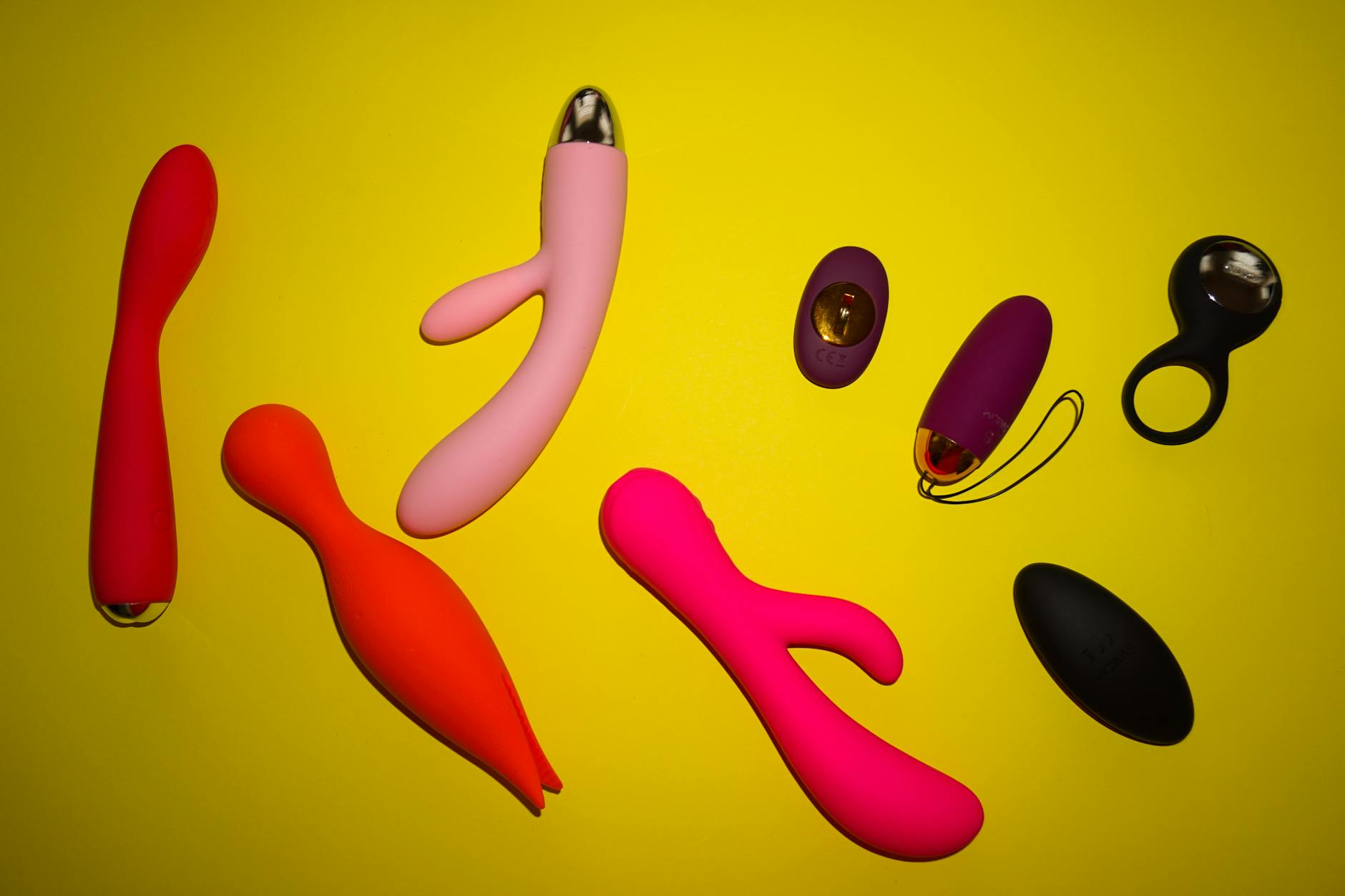
Let's talk about the elephant in the bedroom
You want to try a clitoral suction vibrator. Your partner doesn't know yet. And the gap between those two facts feels impossibly wide right now.
Here's the thing: this conversation is less risky than you think. In fact, introducing a lemon vibrator or other clitoral vibrator to your partner is often one of the healthiest conversations a couple can have, not because of the toy itself, but because it forces you both to name what you want and why you want it. That's couples' work.
I'm a marriage therapist who's sat through hundreds of these conversations, and the ones that go sideways never actually fail because of the vibrator. They fail because of how the conversation was framed. So let's fix the frame.
Why your brain is catastrophizing (and why you can stop)
You're probably running a worst-case scenario right now. Your partner feels threatened. Your partner thinks you're not satisfied. Your partner thinks this means your relationship is broken.
Let's detox those thoughts. None of them are based on what will actually happen. They're based on cultural shame around female pleasure and an outdated idea that partners are supposed to be each other's sole source of stimulation. That story is dying. Most couples who have this conversation report the opposite outcome: deeper connection, better communication, and sex that feels less like performance and more like play.
The mindset shift that changes everything
Here's what reframes this whole thing: you're not introducing a threat. You're introducing a tool that helps your body do what it's designed to do. Your clitoris has 8,000 nerve endings. A clitoral suction vibrator like the Lem taps into stimulation patterns that manual touch alone can't always reach. That's not a reflection on your partner. It's just anatomy.
When you frame it as "something that helps my body feel good," instead of "something I'm doing because you're not enough," everything shifts. The conversation becomes collaborative instead of defensive.
The conversation itself: exactly what to say
Timing matters. Not during sex. Not when someone's stressed or rushed. Pick a moment when you're both relatively relaxed, neither of you is hangry, and you have thirty uninterrupted minutes. A car ride, a walk, Sunday morning in bed.Open with one of these lines:
"I've been researching something that could help my pleasure. I want to share it with you because I want you involved." That invites partnership from the first sentence.
Or: "I found something I'm curious about trying together. It's not about anything missing. It's about exploring something new." This resets the frame to shared experience.
Then name the thing. Don't say "I want to use a vibrator." Name it specifically: "I'm curious about lemon clitoral vibrators. They're designed differently than traditional vibrators. I'd like to try one and I'd like you to be part of that." Specificity makes it real. Vagueness makes it scary.
Then ask the question that matters: "What comes up for you when you hear that?" Sit with their answer. Don't defend. Don't explain. Just listen. Your partner might be curious. They might be uncertain. They might need a beat to process. All of that is normal.
Common reactions and how to navigate them
"Does that mean I'm not enough?" Here's your answer: "No. It means my body responds to different kinds of stimulation, and I want us to explore that together. You're absolutely enough. This is about adding, not replacing." Then explain the difference between a clitoral suction vibrator and other toys. The Lem, for example, uses gentle suction that mimics a different sensation than penetration or traditional vibration. It's not the same as your hand. It's complementary.
"Can I try it on you first?" Yes. Actually, enthusiastically yes. This is the moment where your partner goes from abstract worry to concrete curiosity. Let them hold the toy. Show them how it works. Let them see that it's not mysterious or threatening. It's just a tool, like a massage wand, but for your clitoris.
"I don't know if I'm comfortable with that." That's okay. That's information. Ask what the discomfort is. Is it about them feeling inadequate? About past experiences? About not understanding what it's for? Each version of that discomfort has a different conversation. Your job is to listen without trying to convince them immediately. Sometimes people need time.
The setup that works
If your partner is on board, here's how to make the first experience actually good instead of awkward.
Start separate. Show them how the toy feels on your own body first, without performance pressure. Let them watch if they want to. Let them ask questions. Some partners find this incredibly hot. Some partners feel relieved that they can see what's happening instead of imagining it.
Then bring them in. That might mean they use the toy on you. That might mean you use it while they're inside you. That might mean all of you are just in bed together and it's part of your foreplay, not the main event. There's no script here. You're exploring.
One thing that helps: talk during it. "That feels good," or "I like it when you do this," or "Can you try the other pattern?" This is conversation, not performance. You're teaching your partner what works for your body. That's intimacy.
What happens after
The best part is the conversation after. You'll talk about what you liked, what felt different, what you want to try next. You'll know each other's bodies better. You'll have laughed at something awkward. You'll have done vulnerable work together.
In my practice, introducing a lemon clitoral vibrator is rarely the climax of a relationship conversation. It's usually the opening. It gives couples permission to talk about pleasure more broadly. Suddenly you're discussing what you each actually want, what turns you on, what you've been too shy to ask for. That conversation is the real gift.
And practically speaking: if your partner tries a clitoral suction vibrator with you and finds they enjoy it, you've just expanded both of your pleasure. You might discover that your partner likes watching, or using it together, or incorporating it into different configurations. You might find that everything feels more connected because you've removed shame from the conversation.
The couples I've worked with who've done this report one consistent thing: it wasn't as scary as they thought. It was actually easier to talk about pleasure once they'd said the hardest part out loud.
If your partner stays hesitant
That's also okay. You can respect that and still use a clitoral vibrator on your own. You can also circle back in six months. Comfort grows. Sometimes people just need time to sit with an idea.
What matters is that you asked. You named what you wanted. You invited partnership. That's already a win for your relationship. The rest unfolds from there.
When the conversation is actually about something deeper
Here's something else I see in my office: sometimes the resistance to a clitoral suction vibrator isn't actually about the toy. It's about feeling disconnected. It's about one partner feeling inadequate that's been brewing for years. It's about resentment or old wounds.
If the conversation about introducing a lemon vibrator opens up something much bigger, that's not a failure. That's useful information. It might be worth having a few sessions with a couples' therapist to untangle what's underneath. You don't need anything to be "wrong" to benefit from that. You just need to be two people who want to understand each other better.
The practical question: which lemon clitoral vibrator?
If your partner is curious, start with something straightforward. The Lem is designed specifically for clitoral suction and has a learning curve with the patterns. That's good for long-term exploration, but if you're introducing the concept, simpler might be smarter. The important part is the conversation, not optimizing the toy.
Once you've had the conversation and tried something together, you'll both understand your preferences better. You can upgrade or try different styles. But the first one is less important than the first conversation.
Your takeaway
Introducing a clitoral vibrator to your partner isn't risky. Staying silent about what you want is riskier. It breeds resentment, shame, and disconnection. Naming it, even clumsily, is always the braver move.
Your partner might surprise you. They might become curious. They might want to learn more about how your body works. They might say yes enthusiastically or they might say "let me think about it." All of those are fine. What matters is that you've opened a door.
People also ask
What if I'm embarrassed to talk about lemon vibrators with my partner?
That embarrassment is almost always worse in anticipation than in reality. Try starting the conversation by naming the embarrassment itself: "This feels awkward to say out loud, but I want to talk about it because it matters to me." That honesty actually makes most partners more receptive. They see you being vulnerable, and that softens them. If you need a bridge, you can always share an article or a podcast episode about couples' pleasure. Sometimes it's easier to say "I listened to this and it resonated" than to start from zero.
How do I know if my partner will react badly?
Most people don't react badly. They might be surprised. They might need time. They might be curious. What often looks like a "bad reaction" in your anxiety is actually just "they need a minute to process." The true red flags are contempt, dismissiveness, or refusing to ever discuss your pleasure. Those are relationship patterns bigger than the vibrator. But most partners, when approached with honesty and care, become allies in exploring pleasure together.
Can we use a lemon clitoral suction vibrator together?
Absolutely. That's one of the beautiful things about the Lem and other suction vibrators. Unlike some toys, they work well as a couples' tool. Your partner can use it on you. You can use it while they're involved. You can both take turns exploring how it feels. It becomes something you're doing together, not something separate.
What if introducing toys changes our sex life in a bad way?
It won't, because you're introducing it intentionally and conversationally. You're not surprising each other. You're not using it to shame or hide. If anything, couples who talk about toys and pleasure tend to have more connected sex, not less, because the shame has been lifted. The only way it goes sideways is if there's already deeper disconnection underneath, and in that case, the toy didn't cause it. It just revealed it.
How do I bring this up if we've never talked about sex openly?
That's the real work, and it's worth it. Start small: "I want us to talk more openly about what we enjoy. Can we try that?" You don't need to jump straight to toys. Start with easier questions. "What did you enjoy about our last time together?" "Is there something you've been curious about?" Build the muscles for this conversation. Then, when you introduce the vibrator, you're adding to an existing openness instead of creating it from scratch.
Should I ask for permission before buying a lemon vibrator?
You don't need permission to buy something for your own body. But you do need to decide if you want your partner involved from the start or if you want to explore it alone first. Both are fine. Some people feel more comfortable trying something solo before inviting their partner in. Others want the conversation first. There's no right way. Just be intentional about the choice.
What's actually at stake
Introducing a clitoral suction vibrator isn't really about the toy. It's about telling your partner "my pleasure matters" and "I want you to care about my pleasure." Those are brave things to say. And most partners, when they hear them clearly, will step up.
You deserve a partner who wants to explore your pleasure with you. You deserve to ask for what your body needs. You deserve to use tools that help you feel good. That's not a betrayal of your relationship. That's a foundation for it. Start the conversation. See what happens. I think you'll be surprised by how much easier it is than you feared.